


When I hear the phrase “small businesses for sale in the USA,” a few thoughts immediately come to mind. One of the most common is that many entrepreneurs prefer acquiring an existing business rather than starting entirely from scratch. Buying a business with an established customer base, proven operations, and revenue history often feels like a more secure path compared to building a new venture from the ground up.
Such decisions are rarely made lightly. Typically, they consult experts to conduct a thorough SWOT analysis and commission detailed studies to evaluate the viability of the purchase—examining both the current performance and the future outlook of the enterprise. Only after these careful assessments do they move forward with the acquisition.
According to the U.S. Small Business Administration (SBA), more than 30 million small businesses operate across the nation, collectively accounting for nearly half of America’s private‑sector GDP and employing over 60 million workers. These enterprises form the backbone of the U.S. economy, from family‑owned diners to innovative tech startups. Each year, thousands of these businesses change ownership—whether it’s a neighborhood café in Chicago, a boutique fitness studio in Austin, or a fast‑growing e‑commerce brand shipping nationwide.
Small Businesses for Sale in the USA
The United States offers a diverse ecosystem for buying and selling small businesses. From local brokers to global online platforms, buyers can access opportunities across every industry and state.
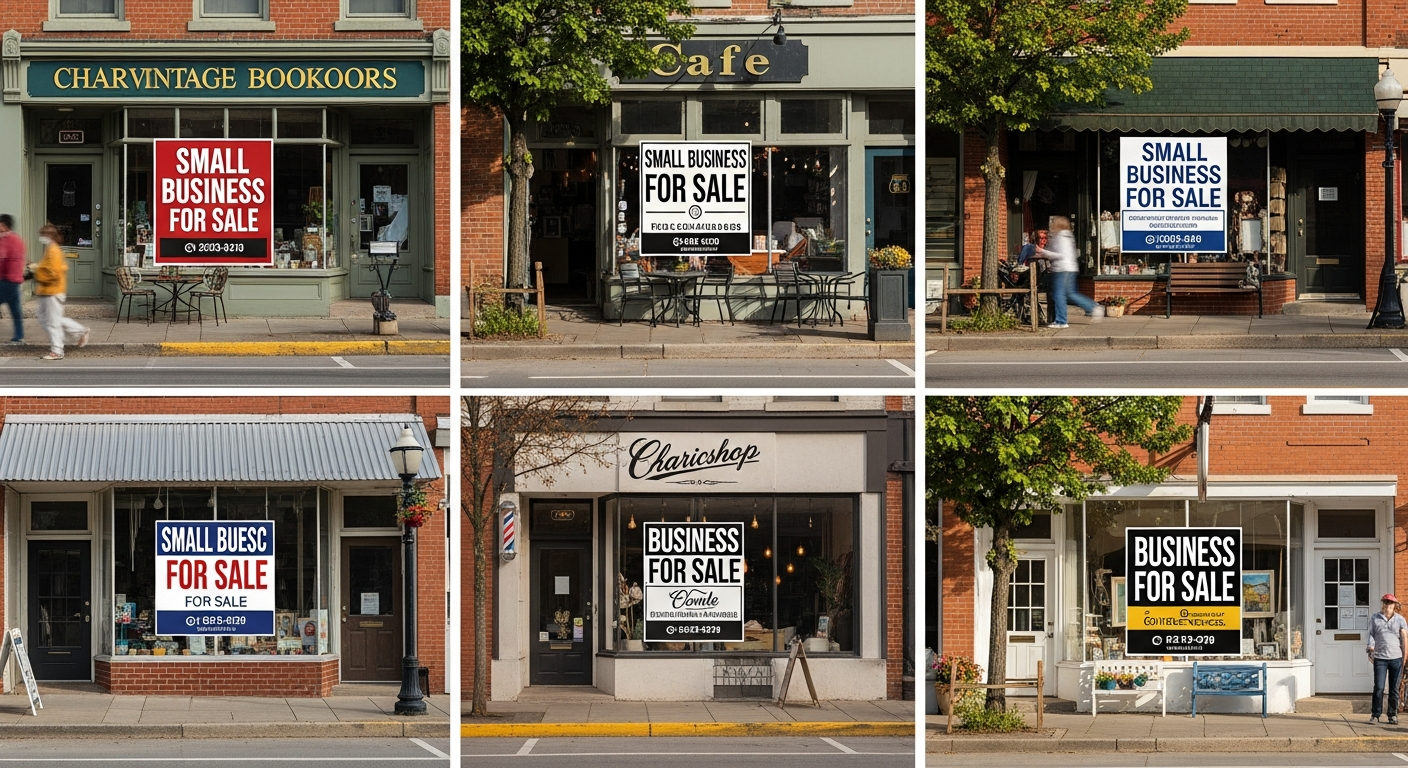
In this detailed guide, you will get proper information about this topic.
How to find small businesses for sale in the USA
The real challenge isn’t finding businesses for sale—it’s figuring out where to look and how to sort through the options.
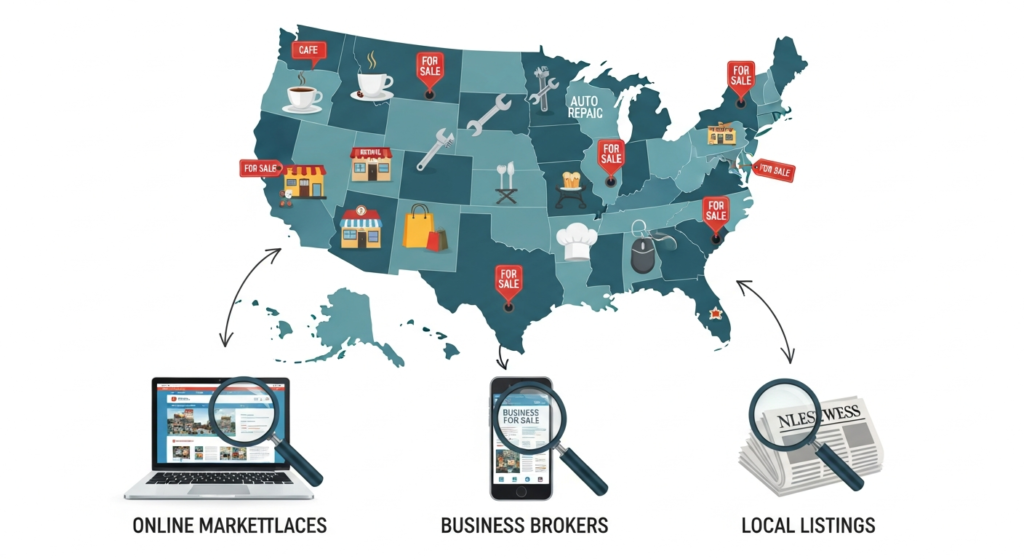
Take business-for-sale marketplaces, for example. Sites like BizBuySell, BusinessesForSale.com, and BizQuest list thousands of opportunities across the country. You can filter by industry, location, or even price range, which makes them especially handy if you’re just starting out.
Then there are digital business exchanges. If you’re more interested in online ventures—think e‑commerce stores, SaaS companies, blogs, or Amazon FBA businesses—platforms like Flippa, Empire Flippers, and MicroAcquire are built for exactly that. They don’t just show listings; they often include traffic analytics, revenue verification, and even seller interviews so you can get a clearer picture of what you’re buying.
Of course, you can also go through broker networks. Professional brokers curate listings and guide you through the tricky parts like valuation, negotiation, and due diligence. Many specialize in certain industries, so if you’re eyeing a restaurant, healthcare practice, or retail shop, a broker can be a great ally.
And don’t overlook local channels. Chambers of commerce, community boards, and even Craigslist sometimes feature smaller, owner‑listed businesses. These may not be as polished as the big marketplaces, but they can reveal hidden gems—often at more affordable prices.
Online Businesses for Sale
The digital economy has created a booming secondary market for online businesses. If you are planning to buy online businesses in USA, read the following details. Basically, Buyers can acquire established websites, apps, or e-commerce stores with proven revenue streams and customer bases.
By late 2025, the marketplace for buying and selling small businesses has become especially dynamic. Online platforms now list tens of thousands of opportunities, offering buyers the ability to filter by industry, revenue size, and location. States like California, Texas, Florida, and New York consistently rank among the most active markets, reflecting both their population density and entrepreneurial culture. Meanwhile, digital business exchanges have surged, with e‑commerce, SaaS, and Amazon FBA ventures drawing strong interest from investors seeking scalable, online‑first models.
E-commerce stores: Shopify and Amazon FBA businesses are popular targets, often sold with supplier contracts and fulfillment systems in place.
SaaS companies: Subscription-based software businesses offer recurring revenue and scalability, though they require technical oversight.
Content websites: Blogs, niche media sites, and affiliate marketing platforms can generate passive income if traffic is stable.
Mobile apps: App marketplaces list both consumer and enterprise apps, often bundled with user data and monetization strategies.
Essential Tips for Buying a Small Business
Buying a small business isn’t just about spotting a listing—it’s about approaching the process with discipline and foresight. Here’s a practical roadmap to help you move from search to ownership with confidence:
1. Define Your Criteria
Start by clarifying your goals. Pin down your budget (SBA loans can finance up to $5 million), preferred industry, and level of involvement. If you thrive in tech, SaaS or digital ventures may be ideal; if you prefer hands‑on management, retail or food service could be a better fit. Aligning the business with your skills increases your odds of success significantly.
2. Research Thoroughly
Don’t stop at the listing. Request three to five years of profit‑and‑loss statements, tax returns, and asset inventories. Look for warning signs such as declining revenue or rising expenses. As a rule of thumb, many small businesses are valued at 2–3x EBITDA, but context matters—compare against industry benchmarks.
3. Engage Professionals Early
Bring in an accountant, attorney, and broker to guide you through valuation, contracts, and compliance. The SBA’s acquisition framework emphasizes professional support, especially for franchise purchases where disclosure documents are critical.
4. Negotiate Strategically
Begin negotiations with room to maneuver—offers 20–30% below asking are common. For online businesses, verify traffic and revenue with analytics tools. Experienced investors often follow structured stages (LOI, due diligence, closing) to avoid costly missteps.
5. Secure Financing
Explore SBA 7(a) loans with competitive rates (7–10%), or negotiate seller financing, which often covers 20–50% of the purchase price. Strong personal credit (680+) can make financing smoother.
6. Conduct Deep Due Diligence
Beyond the numbers, examine operations, customer contracts, intellectual property, and staff retention. For digital businesses, audit advertising accounts, SEO rankings, and subscription churn. Cultural fit matters too—will the existing team stay on after the sale?
7. Plan the Transition
A smooth handover is essential. Aim for a 30–90 day transition period to transfer systems, train staff, and reassure customers. Earn‑outs or performance‑based payments can align incentives between buyer and seller during this stage.
Common Pitfalls to Avoid
- Overpaying: Cap valuations at around 4x annual profit unless growth potential is extraordinary.
- Ignoring leases or contracts: Hidden liabilities can erode profitability.
- Rushing the process: Expect timelines of 6–9 months from search to closing.
The Payoff
With persistence and careful planning, buyers in today’s market often report returns of 25% or more within the first year. Whether you’re acquiring a neighborhood café or a SaaS platform, the key is structure: define, research, negotiate, and transition with precision.
Why Think About Buying a Small Business in the USA?
Before diving into the “where,” it’s worth pausing on the “why.” Starting a business from scratch can be an uphill climb—building a customer base, ironing out operations, and facing the sobering statistic that nearly 1 in 5 new ventures fail within their first year. Buying an existing business sidesteps much of that risk. You’re not reinventing the wheel; you’re stepping into a machine that’s already running, complete with revenue streams, trained employees, and established systems.
As of 2025, the timing couldn’t be better. Inflation has cooled, consumer confidence is bouncing back, and certain sectors—like food services, healthcare, and digital services—are proving especially resilient. Imagine acquiring a mid‑sized restaurant in Texas pulling in $500,000 annually with a 15% profit margin, or a SaaS platform that scales globally with minimal overhead. These aren’t just hypotheticals; they’re the kinds of opportunities buyers are seeing every day.
Price points vary widely. While the average asking price for a small business falls between $300,000 and $500,000, turnkey operations can be found for as little as $50,000. And if your sights are set on the digital frontier, the opportunities are exploding. The global e‑commerce market is projected to reach $8 trillion by 2027 (Statista), and in the U.S. alone, online business listings have surged by 25% year‑over‑year, fueled by the post‑pandemic shift toward remote work and online shopping.
Top Platforms for Buying Small Businesses in the USA
| Platform | Focus Area | Key Highlights | Typical Listings / Examples |
|---|---|---|---|
| BizBuySell | Traditional brick‑and‑mortar & franchises | 45,000+ active listings; detailed financials; broker connections; SBA financing options | Boutiques in FL (~$200K), diners in Midwest ($150K–$400K), auto shops in CA ($300K+), clinics in TX ($500K+) |
| BusinessesForSale.com | Global reach with U.S. focus | 57,000+ global listings; ~20,000+ U.S. businesses; valuation tools; strong in manufacturing, hospitality | Bakery in IL ($250K), construction firm in GA ($1.2M) |
| LoopNet | Commercial real estate + businesses | 1,500+ listings; combines property with operations; location‑specific searches | Gas station in AZ with property ($750K) |
| BusinessBroker.net | Broker‑driven franchises & independents | Confidential high‑value deals; broker partnerships; compliance with state laws | Tech repair chains ($1M+) |
| Flippa | Online businesses (websites, apps, e‑commerce) | 5,000+ active listings; AI buyer matching; 12,000 deals closed annually | SaaS VPN app ($150K), content sites <$2,500, Amazon FBA stores up to $7M |
| Empire Flippers | Vetted online businesses | 2,500+ listings; rigorous due diligence; $563M lifetime sales | Amazon FBA health supplements ($85K+), drop‑shipping stores ($200K), YouTube channels |
| Acquire.com | SaaS & apps | 500,000+ entrepreneurs; U.S.‑centric; scalable tech deals | AI tools in VA ($100K–$1M) |
| Website Closers | High‑value e‑commerce & Amazon | Focus on larger deals ($500K+) | Premium e‑commerce brands |
| Quiet Light | Trusted affiliate & content sites | Transparent valuations; strong broker support | Affiliate sites earning $10K/month |
Real-World Example
Consider a buyer in New York seeking a scalable online business. On Flippa, they might find a Shopify store generating $15,000 in monthly revenue, complete with supplier contracts and a loyal customer base. Alternatively, BizBuySell could list a neighborhood café in Brooklyn with strong foot traffic and established staff. Both represent viable paths to ownership—one digital, one physical—depending on the buyer’s lifestyle and goals. If you have chance to acquire dropshipping warehouse business, do not miss it.
Final Thoughts
The U.S. market for small businesses is thriving, offering opportunities from Main Street to the digital frontier. Whether you’re drawn to the charm of a local café or the scalability of an online SaaS platform, the key is preparation: know where to look, what to ask, and how to evaluate. With the right strategy, buying an existing business can be your gateway to entrepreneurship, financial independence, and long-term growth.


Leave a Reply