
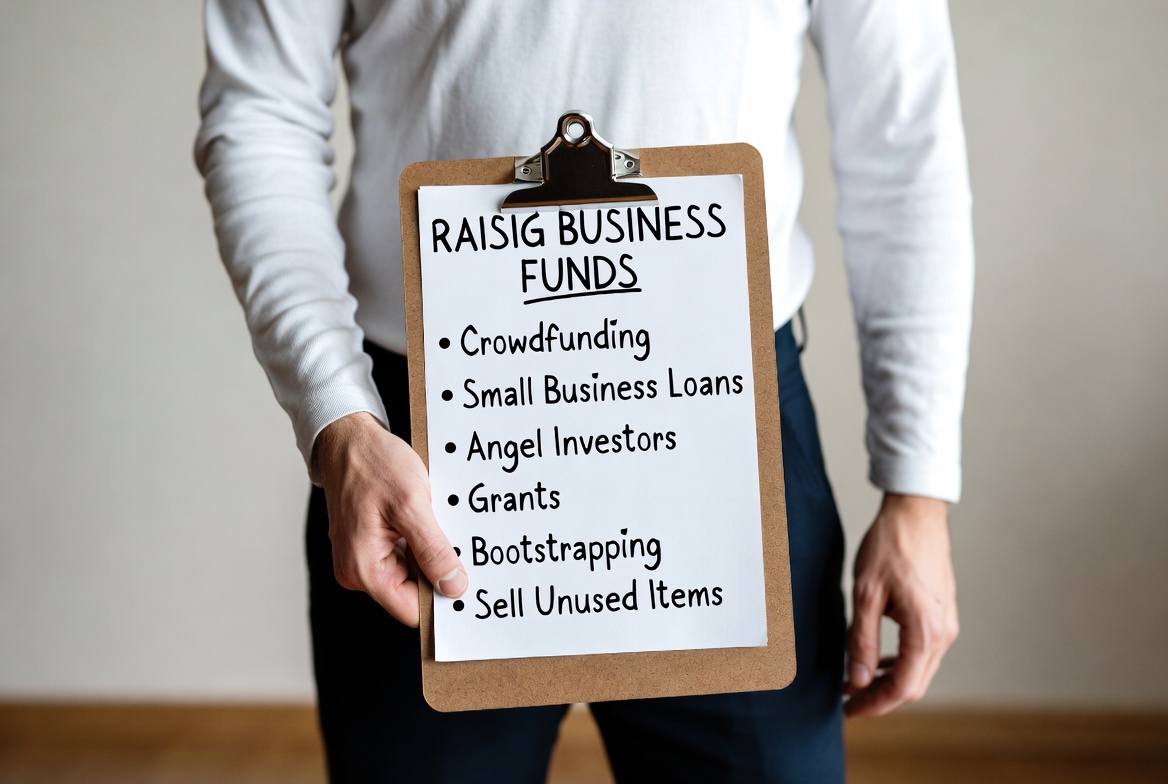

Raising money for business can feel challenging for many people, but here I show how simple it can be to secure funding for your business or expand your company. This page offers practical ways to overcome financial struggles, explaining the easiest and fastest methods to access funds. Each option is possible, but keep in mind that every method comes with its own requirements, risks, and benefits. The right choice depends on your business stage, industry, and growth goals.
Raise Money for Business
Securing capital for your business in the United States isn’t just about money—it’s about unlocking possibility. Whether you fuel your vision through self-funding, debt, equity, or non-dilutive options, the right path depends on where you are in your journey—an ambitious startup or a growing small business. In 2025, opportunities are more diverse than ever, with powerful resources like U.S. Small Business Administration (SBA) programs offering lower-risk loans to help entrepreneurs turn bold ideas into thriving realities. The key is simple: match your funding strategy to your goals, and let your determination drive the rest.
Common Ways to Fundraise for a Business in the USA
1. Bootstrapping (Self-Funding)
Bootstrapping is one of the most common ways entrepreneurs get started. It means relying on your own resources—personal savings, credit cards, or revenue generated from early sales—to fund your business. The biggest advantage is that you retain complete ownership and control, without having to share equity or answer to outside investors. This independence allows you to make decisions freely and grow at your own pace. However, the downside is that growth can be limited, since personal funds often restrict how much you can invest in scaling operations. Many successful companies began with bootstrapping before attracting external funding, proving that determination and resourcefulness can carry a business through its earliest stages.
2. Friends and Family
Raising money from friends and family is one of the fastest and most flexible ways to secure funding. Support often comes in the form of personal loans or small equity stakes, making it easier to access capital without the strict requirements of banks or investors. However, mixing business with personal relationships can create tension if expectations aren’t clear. To protect both sides, it’s essential to formalize agreements in writing and treat the arrangement professionally.
3. Bank Loans or Lines of Credit
Traditional bank financing remains one of the most reliable ways to secure funds for working capital or purchasing business assets. Banks typically offer term loans or revolving lines of credit, giving businesses flexibility in how they access and repay funds. To qualify, you’ll need strong credit history, collateral, and a solid business plan. Interest rates vary depending on market conditions, loan type, and your financial profile. While this option preserves ownership, repayment obligations are strict, so careful planning is essential. For many established businesses, bank financing provides stability and predictable access to capital.
4. SBA-Guaranteed Loans
The U.S. Small Business Administration (SBA) doesn’t issue loans directly; instead, it guarantees loans made by banks and other lenders, reducing their risk and making financing more accessible to entrepreneurs. In 2025, several programs stand out:
- 7(a) Loans: Flexible funding up to millions for general business needs such as working capital or equipment. Includes the new Working Capital Pilot (WCP) for revolving lines of credit.
- 504 Loans: Designed for purchasing fixed assets like real estate or major equipment.
- MARC Loans (new in 2025): Tailored for small manufacturers, offering revolving credit or term loans.
- Benefits: Lower down payments, longer repayment terms, and broader access to capital. Note that eligibility requirements tightened in mid-2025, with stricter ownership and citizenship rules. Entrepreneurs can use the SBA’s Lender Match tool to connect with approved lenders.
5. Grants
Government Grants provide non-repayable funds, making them one of the most attractive financing options for entrepreneurs. They are typically awarded for specific purposes, such as research and development through programs like SBIR and STTR for technology and innovation, or community and export-focused initiatives. Unlike business loans, grants don’t require repayment, but they are highly competitive and often come with strict eligibility criteria. It’s important to note that there are no broad federal grants available for general startup costs. Success depends on aligning your business goals with the grant’s mission and preparing strong, detailed applications.
6. Crowdfunding
Crowdfunding allows entrepreneurs to raise money from a large number of small contributors online, making it one of the most accessible funding strategies. It comes in several forms:
- Reward-Based Crowdfunding: Platforms like Kickstarter and Indiegogo let businesses pre-sell products or offer perks to backers. This model works especially well for consumer goods, creative projects, and innovative product launches.
- Donation-Based Crowdfunding: Sites such as GoFundMe enable individuals or small businesses to collect contributions without offering financial returns, often appealing to community-driven or cause-based initiatives.
- Equity Crowdfunding: Through Regulation CF, companies can raise up to $5 million by selling shares to non-accredited investors. Platforms like Wefunder, StartEngine, and Republic make this process accessible to startups seeking growth capital.
Beyond funding, crowdfunding is powerful for validating ideas, building early customer loyalty, and generating marketing buzz around a new venture.
7. Angel Investors
Angel investors are affluent individuals who step in to support startups at their earliest stages, typically investing between $25,000 and $500,000, with syndicates sometimes pooling larger sums. As highlighted in the 2025 Angel Funders Report, they continue to play a stabilizing role in the U.S. funding landscape, even amid slower venture capital activity. Beyond capital, angels often provide mentorship, industry expertise, and valuable networks that help founders sharpen strategies and accelerate growth. Entrepreneurs can connect with angels through pitch competitions, incubators, or online platforms such as AngelList, SeedInvest, and Gust. Angels bridge the crucial gap between self-funding and venture capital.
8. Venture Capital (VC)
Venture capital is designed for high-growth startups, particularly in sectors like technology, biotech, and fintech. VC firms invest significant amounts of money in exchange for equity, aiming to scale businesses rapidly. In 2025, securing venture capital has become more challenging, as firms are increasingly selective and prioritize startups that demonstrate strong traction, proven market demand, and a clear path to profitability. While VC funding can accelerate growth and provide access to valuable networks, it often requires founders to give up substantial ownership and meet rigorous performance expectations to maintain investor confidence.
9. Alternative Options
Entrepreneurs have several flexible funding paths beyond traditional loans or equity:
Revenue-Based Financing: Instead of giving up equity, businesses repay investors based on a percentage of future sales, making this option attractive for companies with steady revenue streams.
Convertible Notes / SAFEs: These start as debt but later convert into equity, offering a simple way to raise early capital without immediate valuation negotiations.
Accelerators / Incubators: Programs such as Y Combinator provide seed funding, mentorship, and networking opportunities, helping startups refine their models and scale quickly.
10. Selling unused items or properties
Selling unused items or properties is a practical way to generate funds for business growth. Many organizations accumulate assets that no longer serve their core operations, such as old equipment, surplus inventory, or unused real estate. By liquidating these resources, businesses can unlock hidden value and convert dormant assets into working capital. This strategy reduces storage costs, improves efficiency, and provides immediate cash flow without incurring debt. Proceeds can be reinvested into expansion, innovation, or marketing efforts. Ultimately, selling unused items or properties strengthens financial flexibility, supports sustainability, and ensures resources are directed toward productive business opportunities.
Key Fundraising Options in the USA
| Method | Best For | Pros | Cons |
|---|---|---|---|
| Crowdfunding (GoFundMe, Kickstarter, Indiegogo) | Startups, creative projects | Access to wide audience, marketing boost | Requires strong campaign, fees apply |
| Angel Investors | Early-stage startups | Mentorship + funding | Dilution of ownership, investor expectations |
| Venture Capital (VC) | High-growth tech or scalable businesses | Large funding, networking | Strict criteria, loss of control |
| Small Business Loans (SBA, banks) | Established businesses | Retain ownership, predictable repayment | Requires collateral, credit history |
| Grants (federal, state, private) | Innovative or socially impactful businesses | Non-repayable funds | Highly competitive, strict eligibility |
| Bootstrapping (self-funding) | Small businesses, freelancers | Full control, no debt | Limited growth potential |
| Friends & Family Funding | Early-stage ventures | Flexible terms | Risk of personal relationship strain |
Key Tips for Success
Successful fundraising requires preparation, strategy, and awareness of risks. Start by developing strong materials: a detailed business plan, financial projections, and a compelling pitch deck. Understand regulations—equity raises involve SEC rules, so professional guidance is essential. Build traction early, as investors prefer businesses with revenue or proof-of-concept. Many entrepreneurs combine methods, such as bootstrapping with crowdfunding, to gain momentum. Resources like sba.gov for loans and grants or sec.gov for equity rules are invaluable.
Preparation Before Fundraising Ensure your business has a solid legal structure (LLC, C-Corp, etc.), transparent financial records, and a clear growth strategy.
Risks & Challenges Equity dilution, debt burdens, crowdfunding failures, and predatory lenders are common pitfalls—always verify legitimacy.
Expert Tips Network actively at events, leverage U.S. programs, and start small before pursuing larger investors.


Leave a Reply