
The global SaaS market is projected to exceed $250 billion by 2025, with software as a service dominating the business software landscape. Network effects, faster time to market, and predictable recurring income make it one of the most powerful and efficient business models—offering entrepreneurs flexibility, rapid growth potential, and exceptional leverage in 2025 and beyond. Explore this page—it’s completely free! If you’re interested in learning more about this, don’t miss this valuable resource. It’s made just for you!

About this Page
This S as S blog is your go-to resource for:

Zero
%
Investment
Not only this page. This entire website developed for Entrepreneur Skill Development: Explore insights, tutorials, and thought leadership to sharpen your skills and expand your understanding of S aa S ecosystems. Additionally, you can use this page for your Business Growth. So, here you Learn strategies to scale your business, improve operations, and drive customer success.
Is SaaS a Profitable Business?
Answer Is Yes. SaaS can be extremely profitable and scalable. The top 10% of Software as a service companies achieve 70–90% gross margins and often reach $1M in annual recurring revenue (ARR) with fewer than ten employees. Even bootstrapped this type of ventures typically generate around $500K in profit per year by the fourth year.
Profitability stems from recurring revenue, low distribution costs, and high scalability. While development and customer acquisition can be challenging early on, long-term returns are strong when the product solves real problems, retains users, and adapts to market changes.
We believe in open access to valuable information, so everything you find here is completely free. Whether you’re a startup founder, product manager, developer, or just curious about this model, you’re welcome here.
In the future, we may introduce structured courses or lessons. If we do, we’ll clearly indicate whether they are free or paid, so you can choose what works best for you.
Thanks for being part of our growing community. Let’s build smarter, faster, and better—together.
frequently asked questions
Your questions, answered with clarity and confidence.
1. What is software as a service?
Software as a Service is a method of delivering software applications through the internet. Instead of purchasing and installing software on individual computers or servers, users simply subscribe to a service and access it online.
Subscription-based: Most of these products operate on monthly or annual subscription models.
Hosted by providers: The software runs on the provider’s servers. They handle maintenance, updates, and security.
Accessed via browser: Users typically log in through a web browser, making it platform-independent.
2. What Are Common Examples of SaaS?
SaaS (Software as a Service) platforms have become integral to modern business operations, powering everything from collaboration to customer management. Here are some of the most popular examples:
Google Workspace – A suite of cloud-based tools including Gmail, Docs, Sheets, and Drive for seamless teamwork.
Microsoft 365 – Online access to Word, Excel, PowerPoint, and Outlook for productivity anywhere.
Salesforce – A top CRM platform for managing customer relationships and sales processes.
Slack – Team communication made easy with channels, messaging, and app integrations.
Zoom – A reliable platform for video meetings, webinars, and virtual events.
Dropbox – Simplified cloud storage and file sharing across multiple devices.
Shopify – An all-in-one e-commerce platform for building and running online stores.
HubSpot – Comprehensive marketing, sales, and customer service software for business growth.
These SaaS applications run directly in web browsers and require no installation, making them accessible, scalable, and ideal for organizations of any size.
3. What Are the Benefits of SaaS?
Software as a Service provides a range of benefits that make it an attractive option for both businesses and individuals:
Cost Efficiency: No need for costly hardware or upfront software investments—most SaaS tools use flexible, affordable subscription plans.
Easy Maintenance: The service provider manages updates, bug fixes, and infrastructure, freeing you from technical upkeep.
Accessibility: Use your software anytime, anywhere, on any device with an internet connection.
Scalability: Easily adjust your plan as your needs evolve—no complex setups or installations required.
Security: SaaS vendors typically offer strong data protection, regular backups, and compliance with industry standards.
Fast Deployment: Get up and running quickly without lengthy installations or configuration.
Automatic Updates: Always have access to the latest features and security improvements.
You may thanks to these advantages, S aa S has become a go-to solution for startups, remote teams, and enterprises seeking agility and efficiency.
4. What Are the Potential Challenges in SaaS?
Although Software as a service delivers significant advantages, it also presents several business challenges that organizations should be aware of:
Data Security & Privacy: Storing sensitive information on third-party servers can raise concerns about data breaches and regulatory compliance.
Internet Dependency: Software as a software relies on a stable internet connection—any downtime or poor connectivity can interrupt access to critical tools.
Limited Customization: Compared to on-premise systems, these platforms often provide fewer options for deep customization or complex integrations.
Vendor Lock-In: Migrating to a new provider can be difficult and costly due to data transfer, compatibility, and contractual constraints.
Performance Variability: Because resources are shared across users, performance may fluctuate during high-traffic periods.
Compliance & Regulations: Businesses must ensure that their Saas vendors adhere to industry standards such as GDPR or HIPAA.
Recognizing these challenges enables businesses to plan strategically, mitigate risks, and adopt Software as a service solution more effectively.
5. Who Can Start a This?
Anyone with a strong idea and the determination to solve a real problem can start a SaaS business—no big funding or corporate background needed.
Developers & Engineers: Use technical skills to build and launch products independently.
Entrepreneurs & Founders: Combine business strategy with technical collaboration to create scalable solutions.
Students & Hobbyists: Turn side projects or experiments into thriving this type of ventures.
Existing Businesses: Transition or expand by delivering services through a this model.
Teams & Startups: Blend expertise in tech, design, and marketing to develop and grow successful products.
All you need is a clear problem to solve, the right tools—code or no-code—and consistent execution. 90% of million-dollar SaaS began with one person and a good laptop for business use. Your move.
6. What Are the Alternatives to the This Model?
While Software as a Service is widely adopted, several other cloud computing and software delivery models are worth exploring:
IaaS (Infrastructure as a Service): Provides virtualized computing resources such as servers, storage, and networking. Example: Amazon Web Services (AWS).
PaaS (Platform as a Service): Offers a complete development environment for building, testing, and deploying applications. Example: Google App Engine.
On-Premise Software: A traditional approach where software is installed and managed on local servers or computers.
Open Source Software: Software that is freely available and can be modified, customized, and self-hosted.
Hybrid Models: Combine Software as a service with on-premise or private-hosted solutions to balance flexibility, control, and performance.
Each model offers unique advantages and trade-offs, depending on your organization’s technical requirements, budget, and scalability objectives.
7. How many people do you need to start a Software as a service?
Just 1. 70% of Software as a service that hit $1M ARR started solo. You handle idea → build → launch → first 50 customers. Add a co-founder or first hire only when revenue > $10K/month. One person + laptop + grit = enough.
8. How does It work?
You build a web app once. Customers log in, pay monthly, use it instantly—no downloads. You host it on cloud (AWS, Vercel). One codebase serves 10 or 10,000 users. Updates deploy in seconds. Revenue stacks automatically. That’s SaaS: software that scales itself while you sleep.
SAAS insights & resources
Practical strategies and updates for modern businesses.
- Simple Ways to Raise Money for Business
 Raising money for business can feel challenging for many people, but here I show how simple it can be to secure funding for your business… Read more: Simple Ways to Raise Money for Business
 - Choose High-Security Cellphone for Business
 Are you looking for a high-security cellphone for business use? Today’s smartphone is no longer just a communication device—it’s a powerful command center. It carries… Read more: Choose High-Security Cellphone for Business
 - Best Scheduling Tool for Instagram Posts, Reels & Stories – Top 20
 Reach customer on scheduled time through an Instagram post or videos by choosing best scheduling tool for Instagram. Majorly Instagram users age from 13 to… Read more: Best Scheduling Tool for Instagram Posts, Reels & Stories – Top 20
 - Top 10 Best Cloud Based Storage Services in 2025
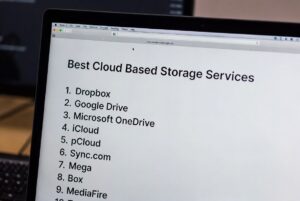 The cloud is one of the smartest and most powerful ways to keep your data safe and accessible online. According to recent reports, we’ve gathered… Read more: Top 10 Best Cloud Based Storage Services in 2025
 - Different Types of Business Bank Accounts in U.S
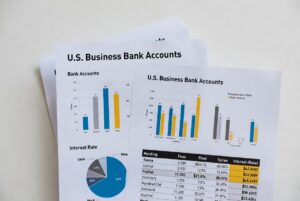 On this page, you will get different types of business bank accounts in U.S. In the U.S., common types include checking, savings, money market accounts… Read more: Different Types of Business Bank Accounts in U.S
 - Business Startup Plan Template with Examples
 Check this detailed business startup plan template to start a new business in the United States. It is an exciting journey filled with opportunity, but… Read more: Business Startup Plan Template with Examples
 - 8 Best Small Business Grants from US Government
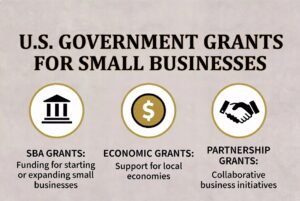 On this page, we’ll explore the top 8 small business grants offered by the U.S. government. Every business requires funding—whether for working capital, innovation, expansion,… Read more: 8 Best Small Business Grants from US Government
 - Risk Management SWOT Analysis for Business
 Every business must analysis Risk management SWOT at time of new business launch, new process implementation, or business loans. Here, we can analysis multiple factor… Read more: Risk Management SWOT Analysis for Business
 - How Email Campaign Services in the U.S. Works
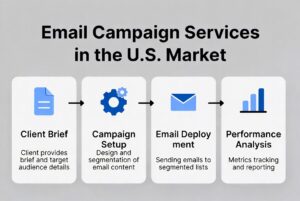 Email Campaign Services in the U.S. are a powerful marketing strategy widely used by digital marketers. On this page, we’ll explore a variety of email… Read more: How Email Campaign Services in the U.S. Works
 - Why Hire Branding Agencies in the USA
 Building a strong brand on your own can be a time‑consuming challenge. In contrast, branding agencies across the USA—especially renowned firms in New York such… Read more: Why Hire Branding Agencies in the USA
 - 15 Time & Attendance Management System for Office
 Whether you are a small, medium, or large enterprise, managing attendance in your office is highly beneficial. Here, I list 15 attendance management systems with… Read more: 15 Time & Attendance Management System for Office
 - How to Hire HR (Hiring human resource manager)
 In the USA, hiring human resource manager very simple process. the role of an HR manager is considered highly important within organizations. In some cases,… Read more: How to Hire HR (Hiring human resource manager)