

Hey, Let’s Talk About Portable Mortgages – Your Ticket to Keeping That Sweet Low Rate When You Move! Imagine you locked in a crazy-low 2.5% rate a few years ago, but now life is pushing you to move. Normal mortgages would force you to break that deal, eat thousands in penalties, and start over at today’s 6-7% rates. Ouch! A portable mortgage lets you simply pick up your existing loan – rate, term, balance, everything – and drop it onto your new house. You avoid the penalty pain and keep paying the same low rate. Pretty cool, right?
What Exactly Is a Portable Mortgage?
You sell your current home and buy a new one, and instead of paying off your old mortgage (and getting slapped with prepayment charges), you transfer the exact same mortgage to the new property. We’re talking the same interest rate, the same remaining years, the same amortization – the whole package moves with you.

Most fixed-rate mortgages allow this, but variable-rate ones usually don’t, and your lender has to say yes.
Why Should You Care Right Now?
If you snagged a mortgage before rates exploded after 2022, porting can save you tens of thousands of dollars. A single percentage point difference on a $300,000 loan can easily mean $30,000 less interest over the life of the loan. In today’s world (November 2025), where rates are still hovering around 6-7%, keeping your old 3% or 4% rate feels like winning the lottery when you move.
Who Actually Wins With a Portable Mortgage?
You will love this option if:
- You’re sitting on a low fixed rate that beats anything on the market today
- You move fairly often for work, family, or upsizing/downsizing
- You hate the idea of paying 3-5% of your mortgage balance just to get out of your current deal
- Your finances are stable enough to pass a quick re-qualification
How Is a Portable Mortgage Different from a Regular One?
Here’s the side-by-side you’ve been looking for:
| Feature | Portable Mortgage | Regular Mortgage |
|---|---|---|
| Interest Rate | You keep your original low rate | Forced onto today’s (usually higher) rate |
| Prepayment Penalties | Usually avoided | You pay big if you break the old one |
| Flexibility | Stuck with the same lender | You can shop around for the best new deal |
| Timing | Must sell & buy almost simultaneously | No timing pressure |
| Extra Borrowing | Often “blended” with a higher rate | Everything at the new market rate |
The Good, the Tricky, and the “Watch Out” Parts
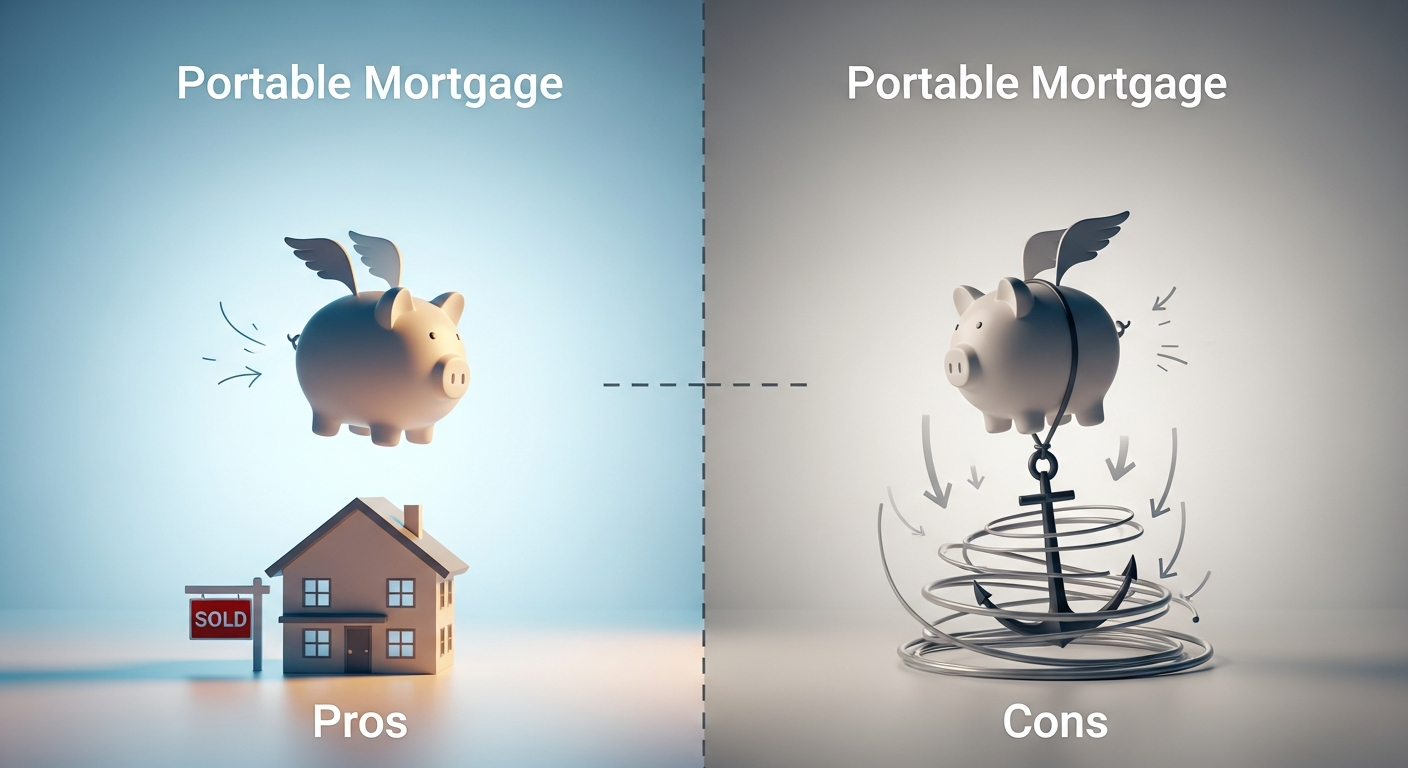
What you’ll love (the pros):
- You keep that amazing low rate
- No nasty prepayment penalties
- Way less paperwork and often a faster closing
- Your sale proceeds flow straight into the new home without drama
What can bite you (the cons):
- You’re locked into your current lender – no shopping for better service or features
- You still have to re-qualify (yes, they check your income and credit again)
- Sell and buy dates have to line up perfectly (usually 30-120 day window)
- If you’re buying a more expensive house, the extra money comes at today’s higher rate (“blend and extend”)
How Do You Actually Do It? (Step-by-Step So You Don’t Miss Anything)
- Grab your mortgage documents and look for the word “portable” (or just call your lender and ask).
- Figure out how much house you’re buying and whether you’ll need extra borrowing.
- Tell your lender you’re moving – do this 60-90 days early so everyone stays calm.
- Hand over updated pay stubs, tax info, etc. – you basically re-qualify under today’s rules.
- Work with your realtor and lawyer to line up the sale and purchase closing dates.
- Sign the paperwork and boom – your old mortgage now lives at the new address!
Real-life example: You owe $400,000 at 2.5% and you’re buying a $500,000 home. You port the $400k at 2.5%, borrow an extra $100k at 5%, and end up with a blended rate around 3.3% instead of paying 5% on the whole $500k. That’s real money in your pocket every month.
The Challenges You Need to Know About Before You Get Excited
We won’t sugar-coat it – porting isn’t always smooth sailing:
- Miss the timing window? You’re back to penalties and a brand-new higher rate.
- Life changed (new job, more debt)? You might not requalify and the port gets denied.
- Buying a pricier home means part of your mortgage jumps to current rates anyway.
- In the U.S. it’s pretty rare unless you have a VA or FHA loan; in Canada and the UK it’s much more common.
A Few Extra Nuggets for You
- In Canada, watch out for possible CMHC insurance top-ups if your loan-to-value changes.
- Most residential fixed-rate mortgages today are portable, but always double-check.
- If porting isn’t an option, look at assumable loans (especially VA/FHA in the U.S.) or just bite the bullet and refinance.
Bottom line: If you have a killer low rate and you think you might move in the next few years, a portable mortgage is one of the smartest features you can have. Talk to your lender early, line everything up, and you can move house without moving your interest rate sky-high!



Leave a Reply