


The U.S. healthcare system relies on medical billing and coding specialists to perform essential behind-the-scenes work by converting medical services, diagnoses, and treatments into standardized codes. These are allowing healthcare providers to receive accurate reimbursement from insurance companies and patients. These specialists connect clinical services with financial processes, ensuring healthcare organizations remain both solvent and compliant.
Medical Billing and Coding Specialist Overview
As the healthcare industry expands and digital systems grow more complex, skilled billing and coding specialists have become increasingly important. Their work ensures accurate patient records, efficient claims processing, and proper reimbursement for healthcare providers. These professionals are the backbone of healthcare administration, bridging the gap between clinical care and financial operations. Below is a comprehensive article that covers their responsibilities, qualifications, career outlook, and challenges.
Job Responsibilities
Clinical Documentation & Coding
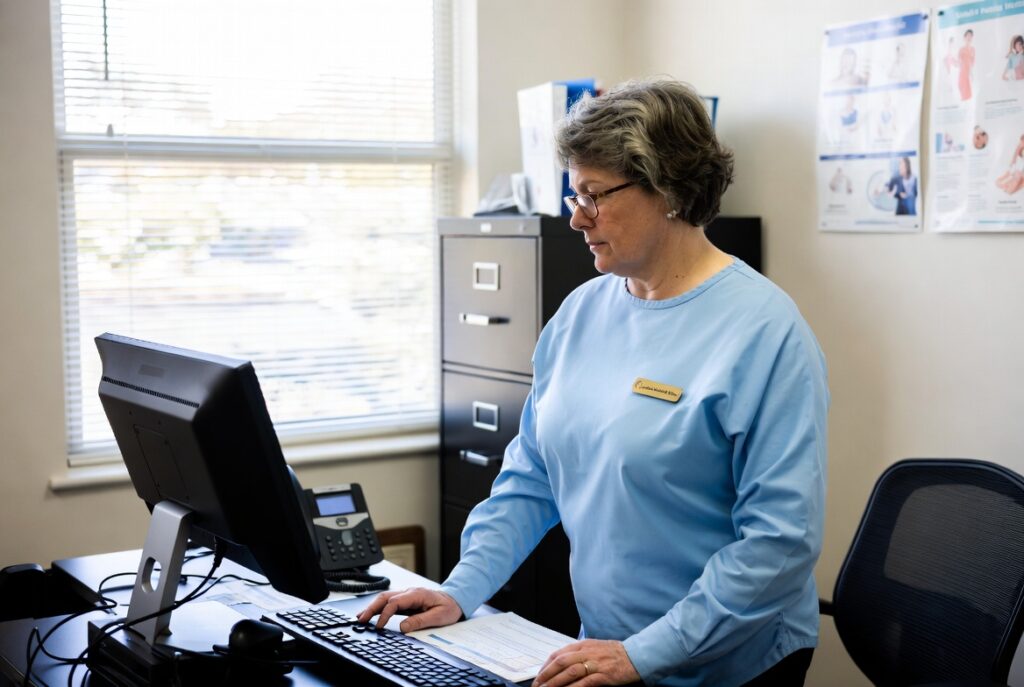
Every day, billing and coding specialists rise to the challenge of transforming complex medical documentation into clarity and precision. They carefully review and analyze patient records—physician notes, lab reports, and procedural details—ensuring that every piece of clinical information is captured accurately. With skill and focus, they assign standardized diagnostic and procedural codes using ICD-10-CM, ICD-10-PCS, CPT, and HCPCS systems, turning medical language into a universal standard that drives proper reimbursement and supports patient care.
By abstracting relevant data, they safeguard the integrity of healthcare records while enabling efficient claims processing. And with unwavering dedication, they stay current with annual code updates, payer policies, and evolving industry guidelines, proving that their commitment to accuracy is not just a task, but a vital contribution to the future of healthcare.
Billing & Claims Management
Billing specialists play a powerful role in keeping the healthcare system moving forward with accuracy and efficiency. Each day, they prepare, submit, and track insurance claims for Medicare, Medicaid, and private insurers, ensuring that providers are reimbursed for the care they deliver. They verify patient insurance eligibility, coverage, and benefits before billing, preventing costly errors and delays. When claims are denied or rejected, they rise to the challenge—identifying issues, correcting them, and resubmitting with determination, even managing appeals and adjustments to secure rightful payment.
With precision, they post insurance and patient payments, along with contractual adjustments, to maintain accurate patient accounts. They generate clear patient statements, assist with billing inquiries, and arrange payment solutions that ease financial stress. And through vigilant monitoring of unpaid claims and accounts receivable, they reduce revenue delays, strengthening the financial health of the entire organization. Their work is not just administrative—it is a mission of persistence, accuracy, and service that ensures healthcare providers can continue delivering care with confidence.
Compliance & Quality Assurance
Billing and coding specialists embody the highest standards of integrity and responsibility in healthcare. They ensure strict adherence to HIPAA regulations, safeguarding patient confidentiality with unwavering commitment. By following federal, state, and payer-specific billing and coding regulations, they uphold the trust placed in them by both patients and providers. Their diligence shines through routine audits of coded records, where they identify errors and strengthen compliance, reinforcing the accuracy and reliability of healthcare data.
With precision, they maintain documentation that aligns with organizational and regulatory standards, creating a foundation of transparency and accountability. And when potential compliance risks arise, they act decisively—reporting findings to management and protecting the organization from harm. Their work is not just about rules and regulations; it is about being guardians of trust, champions of accuracy, and defenders of patient rights in a complex healthcare landscape.
Communication & Collaboration
Billing and coding specialists thrive at the heart of collaboration, ensuring that every detail in healthcare documentation is clear and accurate. They coordinate with physicians, nurses, and clinical staff to resolve discrepancies, transforming complex records into precise codes that support patient care and financial integrity. With persistence and professionalism, they communicate with insurance carriers to verify coverage, resolve claim issues, and appeal denials, standing firm as advocates for both providers and patients.
Their dedication extends to patients directly, as they respond to questions about billing statements, insurance coverage, and balances with clarity and compassion, easing confusion and building trust. And by working hand-in-hand with revenue cycle and administrative teams, they optimize reimbursement and reduce claim turnaround time, strengthening the financial health of the organization. Their role is not just administrative—it is a mission of teamwork, advocacy, and service that keeps the healthcare system running smoothly and reliably.
Data Management & Administrative Support
- Maintain accurate patient demographic, insurance, and billing information in EHR and billing systems.
- Organize and manage medical records and billing documentation efficiently.
- Generate reports on coding accuracy, claim status, productivity, and revenue performance.
- Support month-end reconciliation and closing procedures as required.
- Participate in continuing education to maintain professional certifications such as CPC, CCS, or equivalent.
Together, billing and coding professionals ensure a smooth revenue cycle from patient visit to final payment.
How to become certified medical coder and biller?

To become a certified medical coder and biller, you’ll need formal training, certification from a recognized body (like AAPC or AHIMA), and ongoing education to stay current with coding updates and regulations.
Step-by-Step Path to Certification
1. Education & Training
- High School Diploma/GED is the minimum requirement.
- Enroll in a medical billing and coding program (certificate, diploma, or associate degree). These programs cover anatomy, medical terminology, healthcare law, and coding systems (ICD-10, CPT, HCPCS).
- Training can be completed in 9–24 months, depending on the program.
- These programs are offered by community colleges, vocational schools, and online institutions and can often be completed within several months.
2. Choose a Certification
Certifications enhance credibility, job prospects, and earning potential. Widely recognized credentials include:
- AAPC (American Academy of Professional Coders): Offers the Certified Professional Coder (CPC) credential, one of the most recognized in the industry.
- AHIMA (American Health Information Management Association): Offers Certified Coding Specialist (CCS) and Certified Coding Associate (CCA) credentials.
- Certified Professional Biller (CPB)
- Certified Billing and Coding Specialist (CBCS)
- These certifications require passing comprehensive exams and ongoing continuing education, ensuring professionals remain knowledgeable about industry changes.
3. Prepare for the Exam
- Take practice tests and review coding manuals.
- Many training programs include exam prep courses.
- Expect exams to be multiple-choice, timed, and scenario-based.
4. Gain Experience
- Entry-level positions may not require certification, but certified coders are preferred and often earn higher salaries.
- Internships or on-the-job training help you build practical skills in billing software and electronic health records.
5. Maintain Certification
- Certifications require continuing education units (CEUs) to stay valid.
- Annual updates to ICD and CPT codes mean coders must stay current with industry changes.
Note: Some employers favor candidates with an associate degree in health information technology or related fields, especially for advanced or hospital-based roles. Compared to many healthcare careers, the training path is relatively affordable and does not require a full four-year degree.
Essential Skills
Successful medical billing and coding specialists combine technical expertise with strong interpersonal skills. Key competencies include:
- In-depth understanding of medical terminology and coding systems
- Proficiency with electronic health records (EHR) and billing software
- High attention to detail and analytical thinking
- Problem-solving skills for resolving claim denials
- Clear communication with providers, insurers, and patients
- Strong ethical standards and respect for patient privacy
Adaptability is also essential, as technology and regulations evolve frequently.
Salary and Compensation
Earnings for medical billing and coding specialists vary based on experience, certifications, location, and work setting. Hourly pay generally falls between $20 and $37, while annual salaries often range from the mid-$40,000s to over $58,000 for certified professionals. Those working in hospitals, specialized facilities, or remote roles with advanced credentials tend to earn higher wages.
Job Outlook and Work Settings
Demand for medical billing and coding specialists remains strong across the United States, with tens of thousands of job openings available. Employment growth is driven by an aging population, increased healthcare utilization, and widespread adoption of digital health records.
Professionals can work in hospitals, physician offices, outpatient clinics, insurance companies, or third-party billing firms. Remote and hybrid positions are increasingly common, offering flexibility and work-life balance.
Challenges in the Profession
While rewarding, the field presents challenges. Specialists must keep up with frequent coding updates, navigate complex insurance requirements, and manage high volumes of claims under tight deadlines. Maintaining accuracy while meeting productivity expectations requires focus, discipline, and continuous learning.
Emerging Trends and Future Outlook
The future of medical billing and coding is shaped by several key trends:
- Remote Work Expansion: More healthcare organizations are outsourcing coding and billing tasks.
- Technology Integration: AI-assisted coding tools and automated claims processing are improving efficiency.
- Specialization: Increased demand exists for coders with expertise in areas such as oncology, cardiology, and surgical procedures.
- Data Analytics: Accurate coding supports healthcare research, quality improvement, and policy decisions.
Professionals who embrace technology and specialization will have strong career prospects.
Conclusion
Billing and coding specialists are unsung heroes of healthcare, ensuring that the system runs smoothly behind the scenes. By ensuring accurate documentation, timely reimbursement, and regulatory compliance, they support both patient care and organizational sustainability. In a world where healthcare complexity is rising, these professionals stand as pillars of precision, efficiency, and trust. With accessible education pathways, solid earning potential, growing demand, and remote work opportunities, this career offers long-term stability and advancement for detail-oriented individuals seeking a meaningful role in healthcare.



Leave a Reply