


When you and I think about protecting our home, homeowners insurance becomes the first financial shield that comes to mind. It’s not legally required in most states, but if you’re taking a mortgage, your lender will almost always ask you to carry it. Without it, you’d be left paying for major repairs or lawsuits out of pocket—and as you’ll see, those costs can quickly run into hundreds of thousands of dollars. So let’s walk through everything you and I should know about home insurance in a simple, friendly, and detailed way.
What Homeowners Insurance Really Does for You
Homeowners insurance is basically a package policy that protects your home, your belongings, and your liability. When unexpected events like fire, theft, storms, or injuries on your property happen, this policy steps in and absorbs the financial burden.
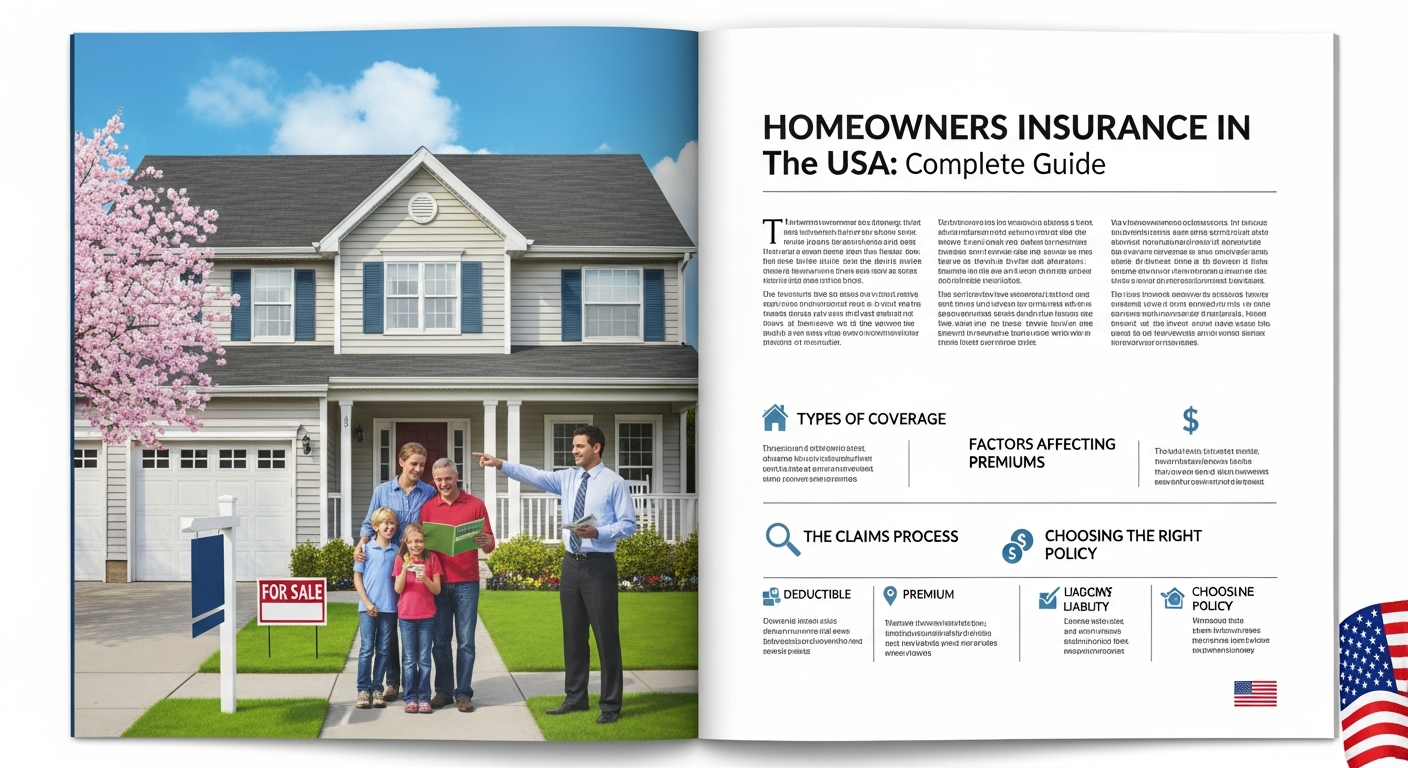
In most cases, a standard policy—usually called an HO-3—splits into two major parts: property coverages and liability coverages.
Section I: Property Coverages (What Protects Your Home)
You and I rely on this section the most because it focuses on the physical structure and our day-to-day needs after damage.
Dwelling Coverage (Coverage A)
This protects the actual structure—the walls, roof, floors, and everything that makes the house stand tall. Most homeowners set limits between $250,000 and $500,000, depending on the rebuild cost.
Other Structures (Coverage B)
If you’ve got a detached garage, tool shed, fence, or even a pool, this part usually takes care of it. Most policies automatically set this at 10% of your dwelling coverage.
Personal Property (Coverage C)
This is where your furniture, electronics, clothing, and household items are protected. Typically, insurers offer 50–70% of your dwelling limit. You get to choose between:
- Actual Cash Value (depreciated)
- Replacement Cost (no depreciation)
Loss of Use / Additional Living Expenses (Coverage D)
If your home becomes uninhabitable, this coverage pays for temporary housing and daily expenses. Most plans set this at 20–30% of the dwelling coverage.
Section II: Liability Coverages (What Protects You Legally)
Personal Liability (Coverage E)
If someone sues you because they were hurt on your property, this pays your legal costs. Standard limits fall between $100,000 and $300,000, but you can go higher for more protection.
Medical Payments (Coverage F)
This covers guest injuries on your property—no lawsuit required. Policies usually include $1,000–$5,000 per person.
What Is Not Covered
Even though homeowners insurance covers a lot, some things remain excluded:
- Floods
- Earthquakes
- Mold and pests
- Wear and tear
- Intentional damage
To fill those gaps, you and I can buy add-ons like flood insurance from NFIP (average ~$700/year) or earthquake coverage.
Types of Homeowners Insurance Policies
To make sure we’re choosing the right policy, here’s a quick table showing the most common types available across the U.S.
Policy Comparison Table
| Policy Type | Best For | Key Features | Typical Cost Adjustment |
|---|---|---|---|
| HO-1 | Basic needs | Covers only named perils | Cheapest, limited |
| HO-2 | Broader basic coverage | Adds falling objects, weight of ice | 5–10% more than HO-1 |
| HO-3 | Most homeowners | All-risk for dwelling | Standard baseline |
| HO-4 | Renters | Belongings + liability only | $15–$30/month |
| HO-5 | Premium buyers | All-risk for home + contents | 10–20% higher than HO-3 |
| HO-6 | Condo owners | Interior structure + contents | Similar to HO-4 |
| HO-7 | Mobile homes | HO-3 style for manufactured homes | Higher, varies by state |
| HO-8 | Older homes | Actual cash value | Lower premiums, lower payouts |
How Much Home Insurance Costs in 2025
Let’s talk real numbers, because pricing matters for every homeowner.
Across the U.S., the average cost in 2025 is $2,110 per year (around $176 per month) for a home with $300,000 dwelling coverage. Some sources show an average around $2,400, and depending on state or insurer, that number shifts a lot.
State-by-State Spread
- Oklahoma: ~$4,200
- Florida: ~$5,800
- California: ~$1,400
- Vermont: ~$900
Some Midwest states even dip near $610/year for lower-risk areas.
Why Premiums Change So Much
From my experience reviewing quotes, these are the most influential factors:
Location
If you live in a hurricane, tornado, or wildfire zone, you might pay 50–100% more.
Home Age and Value
Older homes or those needing HO-8 policies tend to cost more.
Deductibles
If you raise your deductible from $1,000 to $2,500, you can save 10–15%.
Credit Score
Better credit may lower your rate by 20% in many states.
Claims History
One or two claims within 3–5 years may boost your price by 20–40%.
Discounts
You can reduce costs with:
- Bundling auto + home (10–25%)
- Smart home devices (≈5%)
- New home credits (≈7%)
Top Homeowners Insurance Providers in 2025
I want you to have a clear picture of the companies that consistently rank high. These findings combine J.D. Power scores, Consumer Reports data, and market share indicators.
Amica
- Exceptional claims handling
- 95% policyholder retention
- Higher premiums ($2,200–$2,500)
- Not available everywhere
USAA
- Best rates for military families ($1,400–$1,800)
- Strong bundling discounts (up to 15%)
- Only for military members, veterans, and families
State Farm
- Largest provider with 12.8% market share
- Huge agent network
- Fast claims (about 10 days)
- Slightly below-average prices ($1,900–$2,200)
Chubb
- Best for luxury homes (coverage up to $10M)
- Offers home scans and 150% replacement cost
- Expensive ($2,500–$3,000+)
Erie
- Great affordability ($1,500–$1,900)
- Highly rated claims handling
- Limited to certain regions
Nationwide
- Strong add-ons like Brand New Belongings
- Good for multi-policy savings
- Pricing around $1,800–$2,100
Other Notable Providers
- Allstate
- Travelers
- Progressive
- Farmers
- NJM
- Country Financial
Each comes with its own mix of discounts, digital tools, and regional availability.
When You Should Consider Add-Ons
You and I might need extra coverage depending on where we live or the type of home we own.
Popular Endorsements
- Water backup
- Identity theft
- Scheduled personal property
- Flood and earthquake protection
These help close gaps in standard HO-3 policies.
Quick Bullet Summary
- Homeowners insurance costs average $2,110/year but vary widely.
- Dwelling coverage usually ranges from $250K–$500K.
- Personal property protection equals 50–70% of dwelling limits.
- Liability coverage sits around $100K–$300K for most homeowners.
- Flood and earthquake coverage require separate policies.
- Top providers include Amica, USAA, State Farm, Chubb, Erie, Nationwide, Allstate, Progressive, Travelers, Farmers.
- Discounts like bundling and smart devices help reduce premiums.
Final Tips for Choosing the Right Homeowners Policy
Before we wrap up, here are practical steps I’d recommend:
Shop Around
Quotes can differ by 30–50% even with the same coverage limits.
Review Annually
If you renovate or your area’s risk changes, update your policy.
Strengthen Home Safety
Simple things like storm shutters, smoke detectors, and smart alarms often earn small but helpful discounts.
Ask an Agent
A licensed agent can help you tailor coverage to your exact risks—especially if you live in a flood zone, wildfire area, or coastal region.



Leave a Reply