
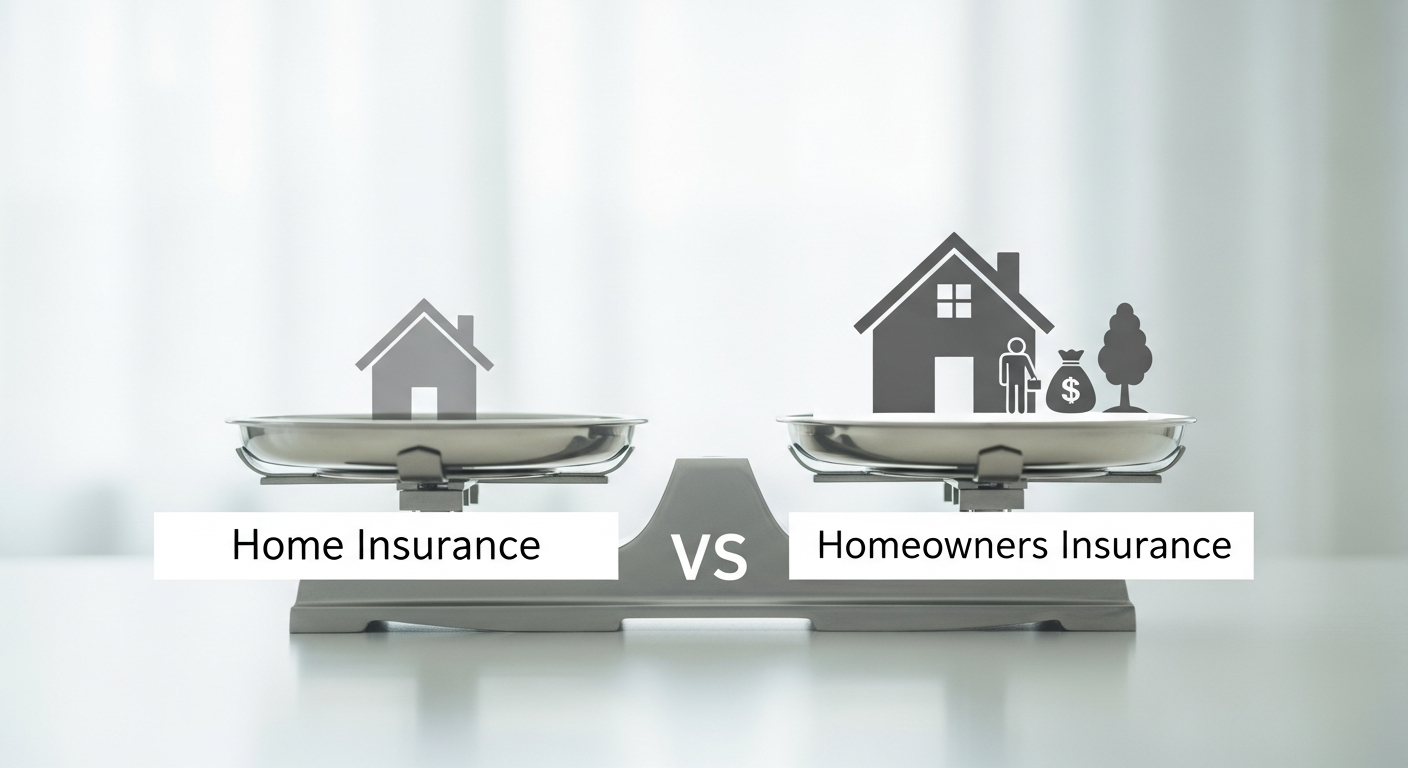

When we search for protection for our homes, we often see the terms home insurance and homeowners insurance used as if they mean the same thing. I’ve been there too—it feels like every website, agent, and forum mixes them up. But once we dig a little deeper, we realize these two aren’t identical. Understanding the difference helps you avoid coverage gaps, prevents overpaying, and ensures you and I choose the exact policy our property needs.
Let’s break this down in a clear, conversational way so you can confidently decide what works best for your situation.
Home Insurance vs Homeowners Insurance
When people say home insurance, they may be talking about any type of property coverage, depending on the situation. It’s a broad, catch-all term that can include homeowners, condo, renters, or even landlord insurance.
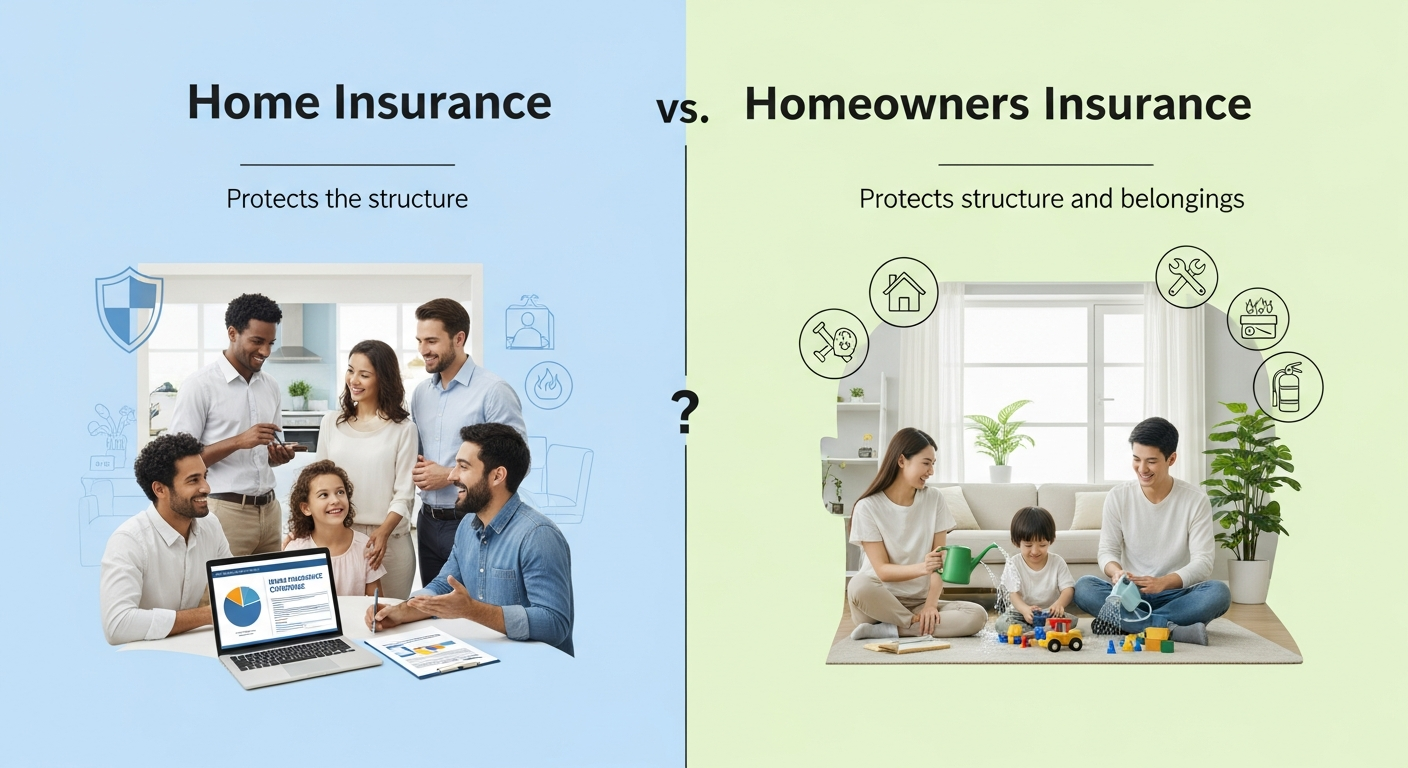
Homeowners insurance, on the other hand, is much more specific. It’s meant for people who own and live in their homes, and it protects the house itself, your personal belongings, your liability if someone gets hurt on your property, and even your living expenses if the home becomes uninhabitable.
Home Insurance: The Big Umbrella
When we say home insurance, we’re talking about a wide range of policies that protect different types of residential properties. It includes:
- Homeowners insurance (HO-1 to HO-8)
- Renters insurance (HO-4)
- Condo insurance (HO-6)
- Mobile home policies (HO-7)
- Landlord or dwelling fire insurance (DP-1/DP-2/DP-3)
- Flood and earthquake insurance
- Umbrella liability policies
Think of it like saying “vehicle insurance”—it could mean your motorcycle, a Tesla, or a delivery truck. The term alone doesn’t tell us how the home is used or who lives in it.
Homeowners Insurance: A Specific Policy Type
Homeowners insurance (usually HO-3 or HO-5) is one policy under the home-insurance umbrella. It’s meant only for people who own and live in their homes. Carriers across the U.S. use standardized ISO forms, and almost every lender requires one of these when you take a mortgage.
Here’s a short snapshot of the key forms:
| Form | Common Use |
|---|---|
| HO-3 | Most common for owner-occupied homes |
| HO-5 | Enhanced, comprehensive coverage |
| HO-6 | Condos (“walls-in” coverage) |
| HO-7 | Mobile/manufactured homes |
When an agent casually says “homeowners insurance,” they’re almost always referring to an HO-3 Special Form.
Who Can Buy Each Type?
Eligibility for Home Insurance
Anyone with an insurable interest in a property can purchase some type of home insurance, including:
- Renters
- Condo owners
- Landlords
- Owners of older or historic homes
- Owners of mobile/manufactured homes
- People with seasonal or secondary homes
- Trusts and LLCs holding property
Eligibility for Homeowners Insurance (HO-3)
This one has much stricter criteria. You must:
- Live in the home as your primary residence
- Use a site-built or approved modular home
- Ensure no major business activity occurs inside
- Live in at least one unit (if it’s 1–4 units)
If you rent out your basement every weekend on Airbnb, you no longer qualify for a standard HO-3. You’d need a DP-3 landlord policy or a short-term rental endorsement.
How Coverage Works in Each Policy
The Six Standard Coverage Sections
All homeowners policies use the A–F coverage structure. Here’s a quick table showing how limits differ across common policy types:
| Coverage | HO-3 (Homeowners) | DP-3 (Landlord) | HO-6 (Condo) |
|---|---|---|---|
| A – Dwelling | Replacement cost | Replacement cost | Usually $0 (covered by master policy) |
| B – Other Structures | 10% of A | 10% of A | 0–10% |
| C – Personal Property | 50–70% of A | 0–50% | 50–100% of A |
| D – Loss of Use | 20–30% of A | 0 or fair rental value | 40% of C |
| E – Liability | $100k–$1M | $100k–$1M | $100k–$1M |
| F – Medical Payments | $1k–$5k | $1k–$5k | $1k–$5k |
Example You Can Relate To
Let’s say you and I own a $400,000 home:
- HO-3: Dwelling $400k, Contents $240k, Loss of Use $80k
- DP-3: Dwelling $400k, Contents $0, Loss of Use only as lost rent
If a fire forces us to leave:
- HO-3 pays hotel, food, and living costs
- DP-3 pays only lost rent (and only if rented out)
This is why choosing the right form matters.
Understanding Perils: Named vs. Open
Named Perils
Policies like HO-2, HO-4, HO-8, and DP-1 list specific covered risks (fire, hail, vandalism, etc.). Anything not listed isn’t covered.
Open Perils
More comprehensive policies—HO-3, HO-5, and DP-3—cover any sudden and accidental loss unless excluded. Typical exclusions are:
- Earthquake
- Flood
- War
- Wear and tear
- Mold
- Pests
- Intentional damage
Many people assume all home insurance has open-perils protection. It doesn’t.
Special Insurance Situations
Renters Insurance (HO-4)
Even though renters insurance falls under “home insurance,” it doesn’t cover the dwelling. It protects:
- Your personal property
- Your liability
- Sometimes additional living expenses
Most people pay about $15–$30/month for $30k contents and $100k liability.
Condo Insurance (HO-6)
You and I would use this if we own a condo. It covers:
- Interior walls
- Upgrades
- Personal belongings
- Loss assessments (e.g., $10k shared deductible)
Mobile Home Insurance (HO-7)
It mirrors HO-3 but is designed for manufactured homes and their unique risks.
Why Premiums Differ So Much
Factors That Raise or Lower Costs
- Occupancy (landlord policies cost 25%–50% more)
- Credit history
- Claims record
- Deductibles
- Age of roof, HVAC, plumbing
- Use of short-term rentals
- Reconstruction cost in your ZIP code
Average U.S. Premiums (May Differ)
- HO-3: $1,400/year
- HO-4: $180/year
- DP-3: $1,900/year
- HO-6: $450/year
Short-term rentals can void HO-3 coverage if not disclosed.
How Claims Work for Each Policy Type
Homeowners (HO-3)
You file, adjuster inspects, and you get:
- Replacement cost for damage
- Additional living expenses
Landlord (DP-3)
You file, but payouts differ:
- Structure repairs go to you
- Lost rent is covered only with a signed lease
- Tenants must use their own renters insurance
Renters (HO-4)
You file online and usually receive:
- Actual cash value (unless you bought replacement cost)
- No ALE unless added
Common Misunderstandings We Should Clear Up
- Flood is never included—you need NFIP or private flood insurance
- Jewelry has limits ($1,500–$2,500) unless scheduled
- Landlord insurance never covers tenant belongings
- HO-3 only protects small business items up to $2,500
How You and I Choose the Right Policy
Simple Decision Guide
- Renting? → HO-4
- Own a condo? → HO-6
- Own a mobile home? → HO-7
- Own a home you live in? → HO-3 or HO-5
- Own a home you rent out? → DP-1 or DP-3
If you’re in a flood- or earthquake-prone area, you’ll need additional coverage.
Real-Life Examples That Show Why This Matters
Case 1: Airbnb Fire Loss
A Denver homeowner’s HO-3 claim was denied because she rented her basement for 90 nights/year. She later switched to DP-3 + home-sharing endorsement.
Case 2: Condo Assessment Charges
A pipe burst caused a $50k deductible for the building. Condo owners with loss-assessment coverage paid nothing; those without paid out of pocket.
Case 3: Stolen Laptop
A renter received only $800 for a depreciated MacBook until she upgraded to replacement-cost coverage.
Final Takeaway
Home insurance is the big umbrella. Homeowners insurance is one specific type under that umbrella, meant only for people who own and live in their home.
When we choose between them, we need to think about:
- How the home is used
- Who lives in it
- Whether we need dwelling, contents, or liability coverage
- Whether we want named or open perils
Once you and I match the policy to our living situation, we can avoid gaps, denied claims, and unnecessary premiums.



Leave a Reply