


You can sharpen your entrepreneurial skills through online entrepreneurship courses, webinars, and entrepreneur classes. Some of these are completely free, while others offer trial or demo sessions before you commit to a full subscription. EDCs not only support skill development but also provide a strong foundation for building your business. Here Entrepreneurship Development Centers EDCs provide a wide range of support, from personalized one-on-one counseling to structured group training programs.
We’re living in a digital era, and having an online presence for your business is more important than ever. Compared to physical products, software products are often cheaper to create and don’t come with transportation costs. That’s one of the reasons why so many people are moving into SaaS (Software as a Service) businesses today — it’s scalable, cost-effective, and fits perfectly with the online-first world we’re in.
Online Entrepreneurship Courses
Now everything is online presence. A business without visibility on the internet risks being invisible to customers. Whether it’s through social media, websites, or digital marketplaces, entrepreneurs must embrace the digital-first approach.
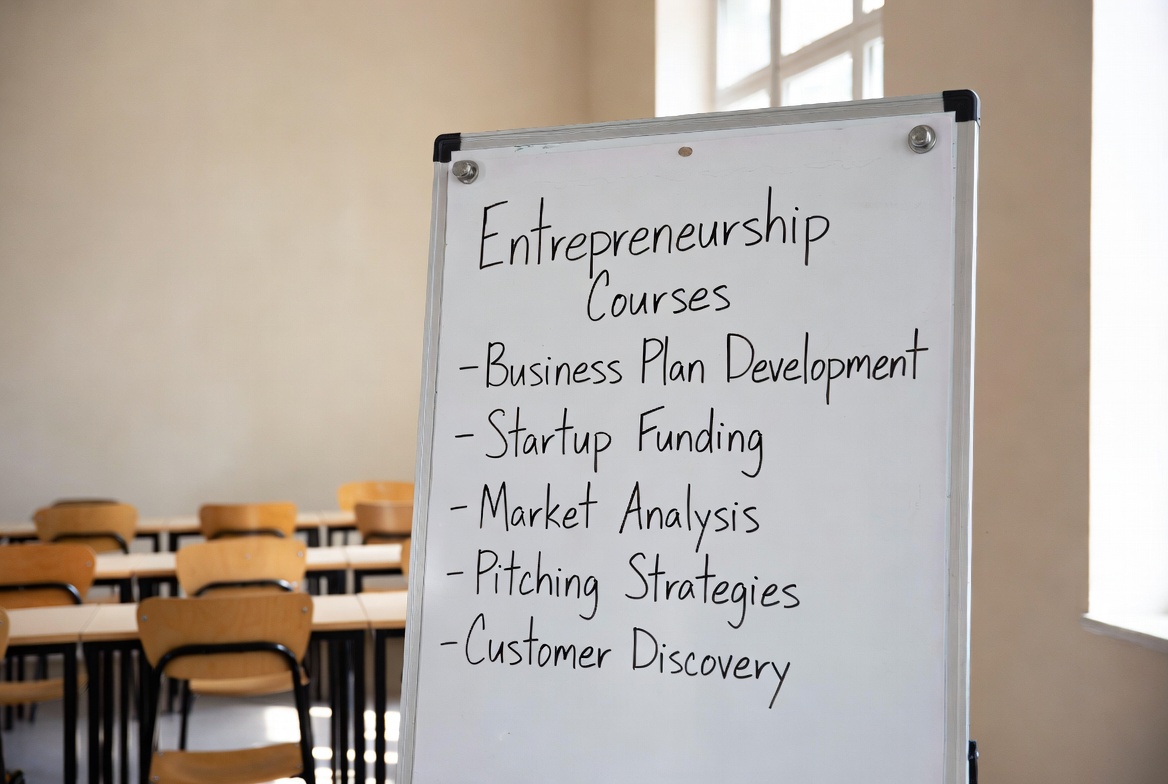
Your interest matters most when it comes to taking up any opportunity. Sometimes these resources are free, and other times they may come with a cost. If you’re here, it’s clear you’re eager to grow your entrepreneurial skills. This page is designed to guide you toward the right places to strengthen your business knowledge online. Keep reading to discover more.
What is Entrepreneurship Development Centers
Entrepreneurship Development Centers (EDCs) are support hubs that guide people through the journey of building and growing a business. They can be run by the government, universities, or private groups, and their main goal is to remove the roadblocks that often stop entrepreneurs from succeeding.
These centers help with challenges like finding funding, creating strong marketing strategies, and understanding complex rules and regulations. By offering this kind of support, EDCs open the door for more people to become entrepreneurs — including veterans, minority communities, and those living in rural areas who might otherwise struggle to access resources.
In the USA, EDCs include Small Business Development Centers (SBDCs), university-based incubators, and private accelerators. These institutions act as bridges between innovative ideas and successful enterprises, offering structured support systems that guide entrepreneurs from concept to execution.
Overview of Entrepreneurship in the U.S.
Entrepreneurial activity in the United States is on the rise. Surveys like the Global Entrepreneurship Monitor (GEM) give us a clear picture of this momentum. The 2024–2025 GEM USA Report shows that about 19% of adults are involved in early-stage entrepreneurship, which is higher than in previous years. in this involvement,
- Women: 15%
- Men: 23%
New Business Rate (Kauffman Foundation): Roughly 0.36 new businesses per adult (with 19.5% including established ventures). Ecosystem support, including EDCs, plays a role—around 20% of new firms cite advisory support.
- Black entrepreneurs: +2.5% year-over-year
- Latino entrepreneurs: +1.8% year-over-year
Business Applications (U.S. Census Bureau): Over 5.8 million applications filed in 2024 (averaging 430,000 per month). That momentum has carried into 2025. While most are independent, SBA programs and EDCs indirectly contribute, with 25% of applicants referencing EDC counseling.
- Immigrants: 28% of new owners
Established Ownership (Kauffman Foundation): About 9.6% of adults own established businesses. SBA studies suggest EDCs help boost survival rates by 15–20%.
- Veterans: 12% engagement rate
EDC-Specific Contributions
While these broad statistics highlight the overall surge in entrepreneurship, the impact of EDCs is more focused. For example, the Small Business Development Center (SBDC) network, backed by the SBA, reported that it helped create or save 300,000 jobs in 2024. That’s a significant contribution, but it’s important to remember that entrepreneurship in the U.S. is shaped by many different parts of the ecosystem—funding sources, incubators, accelerators, and community programs all play a role alongside EDCs.
My Point of View
According to recent reports, we can see how people in the U.S. are actively engaging in business. In this section, I’ll share the real facts along with my own perspective on entrepreneurial skills. Yes, before diving into this topic, it’s important to recognize a simple truth: success in business doesn’t come from shortcuts. Doing things haphazardly wastes effort. I’ve seen many people announce that they’re starting a business, only to quit halfway.
But here’s the difference: some of them learn from their mistakes, develop their skills, and try again. That persistence is what sets successful entrepreneurs apart. Our pursuit of growth is continuous and limitless. Whatever we undertake, we must do it sincerely and with clarity.
If someone believes they can succeed by acting spontaneously, they must be prepared to work hard. Training is essential. Just as a film won’t succeed without preparation, a business won’t thrive without proper learning and discipline.
| Responsibility | Description |
|---|---|
| Data Collection & Integration | Gather information from databases, CRM systems, and ERP platforms; clean and consolidate it for analysis. |
| Data Analysis | Apply statistical and analytical tools to uncover trends, patterns, and anomalies in business performance. |
| Reporting & Visualization | Design and maintain dashboards and reports using tools like Power BI, Tableau, or Looker. |
| Business Strategy Support | Provide insights that guide decisions in marketing, operations, finance, and product development. |
| Collaboration | Work closely with stakeholders to understand their needs and deliver tailored solutions. |
| Ad‑hoc and Recurring Analysis | Perform one‑time deep dives and regular reporting to keep leadership informed. |
| Risk and Opportunity Identification | Highlight potential challenges and opportunities hidden in the data. |
| Translation of Insights | Explain complex findings in clear, simple language so decision‑makers can act with confidence. |
Why Training Matters
This is a common question. asking among the new entrepreneur or willing persons. Entrepreneurship isn’t just about having an idea—it’s about developing the entrepreneurial skills to execute it. That’s why training programs offered by government and private organizations are so valuable. They provide:
- Mentorship: Learn directly from experienced entrepreneurs who guide you through challenges and opportunities.
- Workshops: Gain practical insights from industry leaders on finance, marketing, operations, and specialized fields.
- Funding Access: Explore ways to turn your ideas into reality with support for securing startup capital.
- Networking: Connect with peers, investors, and professionals through platforms designed to expand your business circle.
These resources ensure that entrepreneurs don’t just start businesses—they build ventures that last.
Major Types of Entrepreneurship Development Centers (EDCs)
Entrepreneurship Development Centers in the U.S. can be grouped into several key categories:
- Government Programs: Examples include Small Business Development Centers (SBDCs) and SCORE, which provide free or low-cost business advising and training nationwide.
- Accelerators: Short-term, high-impact programs such as Y Combinator or Techstars, typically lasting 3–6 months, offering seed funding, mentorship, and investor connections.
- Incubators: Long-term support environments designed for early-stage ventures, often focused on technology, social innovation, or community-driven projects.
- Policy and Research Centers: Organizations like the Center for American Entrepreneurship that advocate for pro-startup policies and conduct research to strengthen the entrepreneurial ecosystem.
Top Centers and Their Reach
Some of the most influential EDCs include:
- SBDC Network: Funded by the SBA, with 63 state lead centers and hundreds of local offices, helping entrepreneurs nationwide with business planning, financing, and growth strategies.
- Techstars Accelerator: A global program that has supported 4,000+ startups, providing mentorship, funding, and access to a powerful investor network.
These centers operate across diverse regions — from innovation hubs like Silicon Valley to rural communities — and are especially active in high-growth industries such as artificial intelligence (AI), fintech, and digital health.
Types and Structures
Entrepreneurship Development Centers (EDCs) come in different forms, each serving unique needs. Government-led programs focus on accessibility, while private accelerators emphasize rapid scaling. Here’s a comparative overview:
| Type | Description | Examples | Target Audience | Funding Model |
|---|---|---|---|---|
| SBDCs | Nationwide counseling network hosted by universities and agencies | America’s SBDC (1,000+ centers) | All stages, especially small/rural founders | Federal grants + state matches |
| Accelerators | Intensive bootcamps with equity investment and mentorship | Y Combinator, Techstars | Early-stage tech startups | Equity stakes (5–7%) |
| Incubators | Long-term facilities offering workspace and resources | 1871 (Chicago), Tech Ranch (Texas) | Idea-stage ventures, often social impact | Fees, grants, sponsorships |
| Policy/Research Centers | Advocacy and data-driven support for systemic change | Center for American Entrepreneurship | Policymakers, broad ecosystem | Donations, memberships |
| Specialized Hubs | Focused on underserved groups (minorities, veterans, etc.) | Russell Innovation Center (Atlanta), MBDA | Diverse founders | Government + private funding |
This diversity ensures comprehensive coverage across the entrepreneurial landscape. SBDCs provide broad advising and accessibility, while accelerators like Plug and Play drive innovation across more than 20 industries, from fintech to AgTech.
Private Startup Accelerator
A private startup accelerator, also called a business accelerator, is an intensive program designed to fast‑track early‑stage companies. Over three to six months, founders receive mentorship, seed funding, and investor access. Accelerators focus on rapid growth, networking, and scaling, often taking small equity stakes in exchange for support.
| Accelerator | Focus Areas | Funding / Equity | Duration | Notable Successes (Alumni/Exits) |
|---|---|---|---|---|
| Y Combinator | General tech | $150K / 7% | 3 months | Airbnb, Stripe (4,469 funded, 444 exits) |
| Techstars | Tech, industry-specific | $20K / 6% | 90 days | SendGrid, Zipline (4,116 funded, 951 exits) |
| 500 Global | Global, diverse sectors | $150K / 6% | 4 months | Udemy, Canva (2,600 funded, 339 exits) |
| MassChallenge | High-impact emerging tech | Prizes (no equity) | 4 months | Kickstarter (2,103 funded, 562 exits) |
| Plug and Play | 20+ industries (fintech, health) | Varies | Varies | Dropbox, PayPal (1,447 funded, 140 exits) |
| SOSV | Hardware, food tech | Varies | 3–6 months | NotCo (2,369 funded, 58 exits) |
| Founder Institute | B2B/B2C tech | Varies | Varies | Udemy (591 funded, 259 exits) |
| Alchemist | Enterprise software | $36K / 5% | 6 months | Groove (569 funded, 51 exits) |
| NFX | General | $120K / 5% | Varies | DoorDash (469 funded, 99 exits) |
| AngelPad | General | $120K / 7% | 3 months | Postmates (150 funded, 37 exits) |
These accelerators, often based in innovation hubs like San Francisco and Austin, provide not only funding and mentorship but also lifelong networks that amplify reach and accelerate growth across industries.


Leave a Reply