

If you’re anywhere in the world, you may suddenly face a Cloudflare outage—and for intraday traders, that’s more than just an inconvenience.
When you’ve built strong business skills and taken the next step into stock market investing, intraday trading often becomes your focus. But here’s the painful truth: outages like these can break your trading flow, wipe out profits, and even cause direct losses.
Cloudflare Outage
Imagine being locked out of your trading platform right when you’re about to execute a well‑planned move. Your charts freeze, orders don’t go through, and the market keeps moving without you. For intraday traders, where every second counts, this isn’t just frustrating—it’s financially damaging.
This article is meant as an awareness piece for anyone involved in intraday finance. Technology failures like Cloudflare’s downtime remind us that even the best trading strategies can collapse if the systems we rely on fail.
So keep reading—because understanding these risks is the first step toward protecting your trades and your capital.
A Fragile Digital Backbone
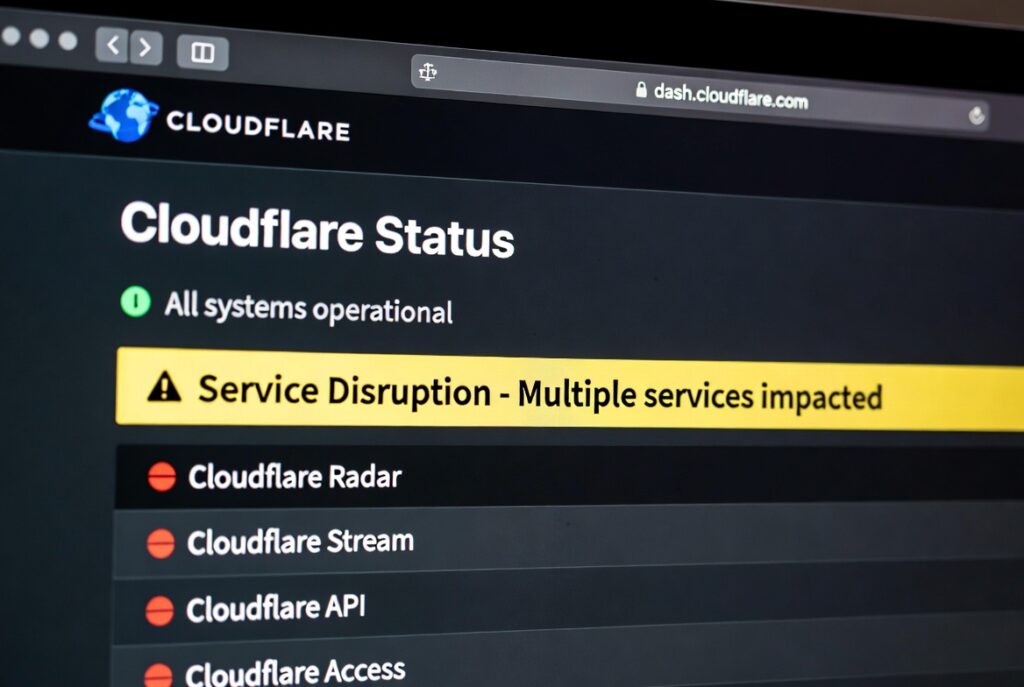
In a stark reminder of the fragility of our hyper-connected financial world, Cloudflare’s global outage on December 5, 2025 sent shockwaves through India’s bustling stock market. The 25-minute disruption, the second major hiccup for the web infrastructure giant in under three weeks, halted access to major trading platforms and left thousands of intraday traders staring at frozen screens during peak trading hours.
The outage struck around midday IST, just as the National Stock Exchange (NSE) and Bombay Stock Exchange (BSE) were humming with activity. Popular discount brokers such as Zerodha, Groww, Angel One, and Upstox—all reliant on Cloudflare’s content delivery network (CDN) and domain name services—reported widespread “500 Internal Server Error” messages.
Impact on Intraday Traders

For intraday traders, who thrive on split-second decisions and high-volume trades within a single market day, the timing was catastrophic.
- Missed Opportunities: One Zerodha user lamented missing a Nifty futures setup at 24,200 with a target of 24,400, only to see momentum vanish once systems recovered.
- Execution Slippage: Another trader reported losing 0.5% on a 50-lot trade due to order delays, underscoring how even seconds of downtime can translate into substantial losses.
- Margin Pressure: With leveraged positions and auto-square-off mechanisms ticking like time bombs, many traders scrambled to intervene manually via phone lines or alternative brokers—if they could connect at all.
The outage turned what should have been a routine Friday session into a nightmare of uncertainty, amplifying risks for India’s 10 million-plus retail traders, many of whom specialize in intraday strategies.
Cloudflare’s Explanation
Cloudflare, which powers about 20% of global web traffic, attributed the downtime to a firewall misconfiguration during a routine security patch for a React vulnerability.
- No Cyberattack: The company confirmed the outage was not the result of malicious activity.
- Rapid Mitigation: Services were restored within 25 minutes after engineers identified and mitigated the issue affecting dashboard-related APIs. Some people are facing text to speech conversion delay.
- Global Fallout: Beyond India’s fintech apps, platforms like Coinbase, Canva, LinkedIn, Spotify, Anthropic’s Claude AI, and Blinkit also experienced disruptions.
Market & Investor Reaction
- Broker Responses: Angel One clarified that core trading engines remained operational but acknowledged login bottlenecks. Zerodha tweeted updates on partial restorations, while Groww urged patience amid surging support tickets.
- Cloudflare Stock: Shares of NET (NYSE: NET) plunged 4.5% in premarket trading, dipping below the 100-day moving average before clawing back to a modest 0.7% close. Despite the stumble, NET remains up over 3% since its prior outage, reflecting investor confidence in its dominance.
- Market Volatility: The Nifty fluctuated by over 100 points during the blackout, magnifying losses for traders caught mid-position.
Risks & Lessons for Traders
- Dependency Risk: Heavy reliance on third-party infrastructure means even minor glitches can halt trading activity.
- Operational Risk: Intraday traders face amplified exposure since their strategies depend on uninterrupted execution.
- Mitigation Strategies: Diversifying platforms, setting automated stop-losses, and maintaining backup brokerage accounts may become essential safeguards.
Regulatory Outlook
Experts warn this could be a wake-up call for diversification. “Centralized infrastructure like Cloudflare is a single point of failure for an ecosystem that’s grown too fast,” fintech analyst Irwan Setiawan noted.
Regulatory bodies such as the Securities and Exchange Board of India (SEBI) may soon weigh in, potentially mandating redundancy protocols for brokers after similar disruptions rattled markets in 2024.
The Takeaway
For intraday traders, the outage was more than a technical hiccup—it was a costly reminder that in today’s hyper-connected markets, technology failures can rival market volatility in their impact.
As one Groww user posted after recovery: “Back to the charts. But next time, I’m hedging my internet too.”
Cloudflare 500 Internal Error Troubleshooting Checklist
Before assuming it’s a global outage, verify it yourself first. Here’s a step-by-step troubleshooting checklist for handling a Cloudflare 500 Internal Error:
- Check Cloudflare Status Page
- Visit Cloudflare’s official status page to confirm if there’s a widespread outage.
- Review Server Logs
- Inspect your origin server logs for errors or misconfigurations causing failed responses.
- Test Origin Server Directly
- Bypass Cloudflare by accessing your server’s IP directly to see if the issue persists.
- Verify DNS Settings
- Ensure DNS records are correctly configured in Cloudflare’s dashboard. if you are using a free hosting service, It may happen.
- Check Firewall & Security Rules
- Misconfigured firewall rules or rate-limiting may block legitimate requests.
- Inspect Application Code
- Look for bugs, unhandled exceptions, or resource overload in your application.
- Clear Cache
- Purge Cloudflare cache and browser cache to eliminate corrupted cached responses.
- Disable Plugins/Extensions
- If using CMS platforms (WordPress, etc.), disable plugins that may conflict.
- Update SSL/TLS Certificates
- Expired or misconfigured certificates can trigger server errors.
- Contact Hosting Provider
- If the origin server is down, reach out to your hosting provider for support.
- Open a Cloudflare Support Ticket
- Provide detailed logs, error codes, and timestamps for faster resolution.



Leave a Reply