
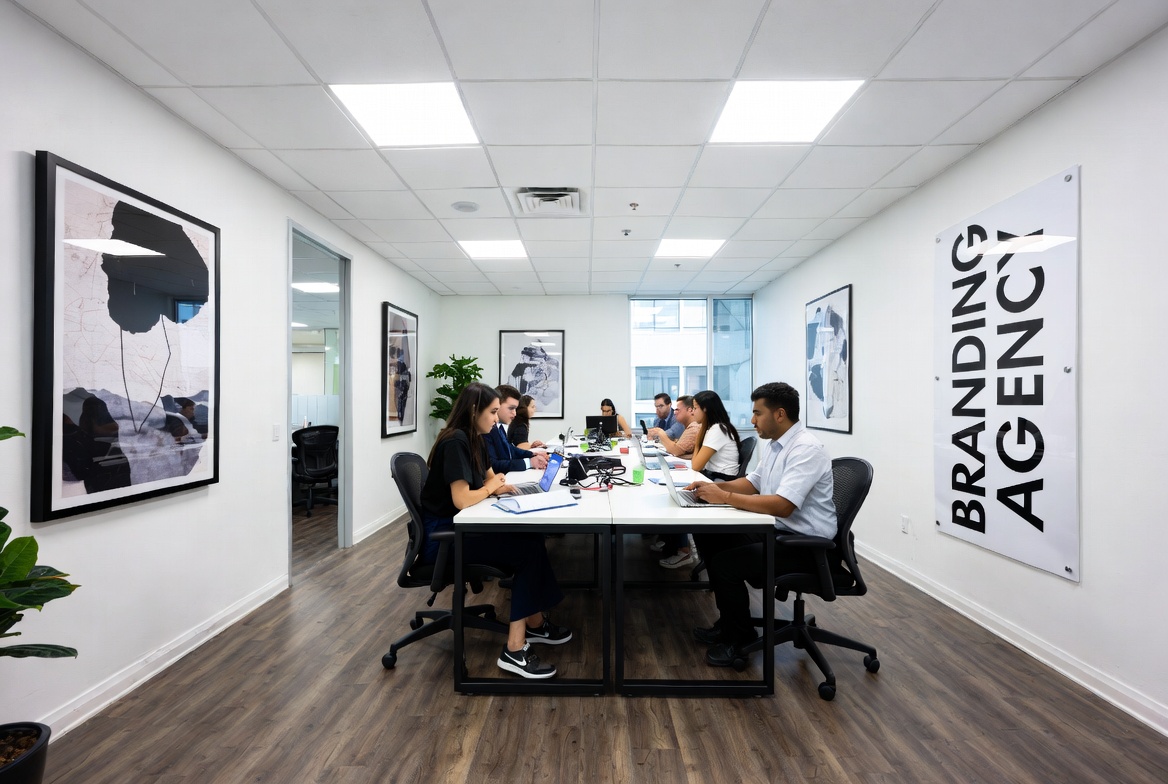

Building a strong brand on your own can be a time‑consuming challenge. In contrast, branding agencies across the USA—especially renowned firms in New York such as Ramotion and Landor Associates—streamline the process and deliver results in a matter of days. These agencies often provide FAQs and resources to help clients grasp the fundamentals of branding.
On this page, I’ll cover the key areas that matter most to businesses exploring professional branding support: strategy, costs, processes, and services. The insights shared here draw from the expertise of leading U.S. agencies including 310 Creative, Bolder, Vibrant Brands, Fix & Form, Watson Creative, Morad Creative, BrandExtract, and Hardy Brands.
What is Branding?
Branding establishes a lasting identity for a business in the minds of its audience and customers. When done effectively, it transforms casual visitors into loyal customers, significantly increasing the chances of long‑term success. More than just a logo, branding shapes how people perceive a company and influence every interaction they have with it. It involves strategy, identity design, and positioning to ensure a company stands out from competitors. Effective branding guides all customer interactions and influences business decisions, creating a consistent and memorable experience. Agencies emphasize that branding defines a company’s core identity, messaging, and values, shaping long-term recognition and trust.
How Much Does Branding Cost?
Branding doesn’t come with a fixed price tag—it depends entirely on the scope of work involved. Costs can range from a simple logo design to a comprehensive brand strategy with full digital implementation. Most agencies recommend viewing branding as an investment, basing the budget on factors like customer lifetime value, market positioning, and long‑term growth potential.
- Firms like 310 Creative highlight comprehensive packages that include both strategy and digital elements.
- Many U.S. agencies note that full rebrands often range from $10,000 to $100,000+, depending on complexity, with value emphasized over fixed quotes.
What is Your Branding Process?
Most agencies follow a structured process involving:
- Discovery – Researching the business, competitors, and target audience.
- Strategy Development – Defining positioning, messaging, and differentiation.
- Visual Identity Creation – Designing logos, typography, color palettes, and brand guidelines.
- Implementation – Rolling out across platforms with client collaboration at key stages.
Agencies like Bolder detail competitor analysis, audience definition, and performance metrics to ensure measurable outcomes. This phased approach ensures clarity, creativity, and alignment with business goals.
Why Hire a Branding Agency?

Hiring a branding agency not only for advertisement purpose. these agencies provide access to expertise in differentiation, consistency, and measurable outcomes. Agencies help businesses:
- Stand out in crowded markets.
- Maintain consistency across platforms.
- Achieve tangible results such as increased market share and customer loyalty.
Top firms like Landor Associates have proven success across diverse industries including tech, retail, and finance, demonstrating the value of professional branding expertise.
What Services Do You Offer?
Full-service branding agencies typically provide:
- Brand strategy and positioning
- Logo and identity design
- Packaging and collateral design
- Digital branding and marketing
- Messaging and tone of voice development
- Brand guidelines for ongoing use
Agencies such as Vibrant Brands manage end-to-end services, from research to execution, ensuring consistency across every brand touchpoint.
How is Branding Different from Marketing?
it’s important to clarify the distinction between branding and marketing. While the two are closely connected, they serve different purposes. Branding establishes the foundation of a company’s long‑term identity, whereas marketing focuses on driving short‑term visibility and sales.
Branding vs. Marketing: A Structured Comparison
| Aspect | Branding | Marketing |
|---|---|---|
| Primary Focus | Builds identity, perception, and emotional connection with the audience. | Promotes products and services through targeted campaigns and tactics. |
| Timeline | Long‑term; foundational and enduring. | Short‑term; campaign‑driven and measurable. |
| Key Activities | Strategy, logo/visual identity, messaging, positioning, and brand guidelines. | Advertising, SEO, social media ads, email outreach, and content promotion. |
| Outcome | Creates loyalty and differentiation in the market. | Generates leads, conversions, and immediate revenue. |
| Agency Role | Strategic partners for rebrands or launches. | Tactical executors for ongoing promotion. |
Agencies stress that branding is the foundation upon which marketing strategies are built. Without a strong brand identity, marketing efforts lack cohesion and long-term impact.
Why is Branding Important for My Business?
Branding creates:
- Recognition – Customers remember and identify your business.
- Trust – A consistent identity builds credibility.
- Emotional Connection – Strong brands foster loyalty and advocacy.
This makes branding a critical investment for both startups and established companies.
Top 10 Branding Agencies in USA
Based on recent industry rankings and expert evaluations, here’s a curated look at the leading branding agencies in the USA. Each entry includes a quick overview plus pros and cons to help you weigh their strengths.
| Rank | Agency | Locations | Overview | Pros | Cons |
|---|---|---|---|---|---|
| 1 | Digital Silk | Miami, FL; Chicago, IL; NYC, NY; San Diego, CA | Defines brand voice through structured processes like discovery, research, and style guides. | Clear methodology; strong identity systems; multi-city presence | Process-heavy for smaller businesses; slower turnaround |
| 2 | Pentagram | Austin, TX; NYC, NY | Iconic design firm treating brand identity as holistic experience. | Decades of iconic work; unmatched design pedigree; global recognition | Premium pricing; may prioritize design over agility |
| 3 | Siegel + Gale | NYC, NY; Los Angeles, CA; San Francisco, CA | Known for “simplicity,” turning complexity into clarity with strategy, naming, and design. | Strong strategic backbone; expertise in naming; clarity-driven approach | High costs; best suited for large enterprises |
| 4 | Mission Control | San Francisco, CA | Builds brand/product experiences for startups using senior leadership and AI-assisted processes. | Startup-friendly; innovative AI use; nimble creative team | Less established; limited geographic footprint |
| 5 | Clay | San Francisco, CA | Focuses on integrated brand systems and digital-first storytelling. | Strong in UX/UI; digital-native branding; cohesive storytelling | Narrower focus on tech-driven brands; less suited for traditional industries |
| 6 | Wolff Olins | San Francisco, CA; Los Angeles, CA; NYC, NY | Uses brand as a transformation tool, unifying purpose across touchpoints. | Bold, purpose-driven branding; global reach; thought leadership | Disruptive for conservative industries; premium fees |
| 7 | Ruckus Marketing | NYC, NY; Allentown, PA | Insight-driven branding for finance and tech sectors. | Strong in finance/tech; growth-oriented branding | Less creative experimentation; regional focus |
| 8 | Lippincott | NYC, NY; San Francisco, CA | Combines strategic clarity with creative precision for emotional resonance. | Balanced strategy + design; emotional impact; long-standing reputation | Works best with large-scale clients; boutique brands may feel overlooked |
| 9 | DesignStudio | NYC, NY | Builds transformative brands through immersive workshops and audience input. | Collaborative process; strong workshop methodology; startup-friendly | Workshop-heavy approach may slow timelines; smaller team size |
| 10 | Labbrand | NYC, NY | Supports transformation with market research, cultural insights, and strategic design. | Strong cultural insights; global perspective; research-driven | Heavy focus on research; less known in US compared to Asia |
How Long Does It Take to Create a Brand Identity?
Timelines vary depending on scope:
- Full rebrands: Typically 3–6 months.
- Brand refreshes: Often completed in a few weeks.
Agencies emphasize collaboration and iteration, ensuring the final identity reflects both creativity and strategic alignment.
What Industries Have You Worked With?
Leading U.S. agencies serve a wide range of clients:
- Startups and nonprofits
- Corporations in tech, healthcare, and consumer goods
- Retail and finance sectors
Clients often seek reassurance that agencies have relevant experience in their industry, which helps build confidence in the agency’s ability to deliver.
Do You Handle Rebranding Projects?
Yes. Agencies frequently manage:
- Audits of existing brand assets.
- Refreshes to modernize identity.
- Full overhauls to reposition businesses.
Rebranding is often necessary to address market changes, mergers, or outdated brand perceptions.
How Do You Measure the Success of Branding?
Success is measured through:
- Brand awareness
- Customer loyalty
- Engagement metrics
- Sales impact and market share growth
Agencies like BrandExtract emphasize research-driven methods and performance tracking to ensure branding delivers measurable business outcomes.
What Makes Your Agency Different?
Every agency highlights unique differentiators, such as:
- Strategy-first approaches
- Research-driven methods
- Creative innovation
- Sector expertise (e.g., mission-driven organizations, tech startups, or consumer brands)
This helps clients choose agencies that align with their values and goals.
Conclusion
These are a vital resource for businesses exploring branding partnerships. U.S. agencies—from Ramotion and Landor Associates in New York to Watson Creative and Hardy Brands—consistently address questions about services, costs, processes, and outcomes. By clarifying these concerns, agencies empower clients to make informed decisions and invest confidently in branding as a driver of long-term growth.
Leave a Reply